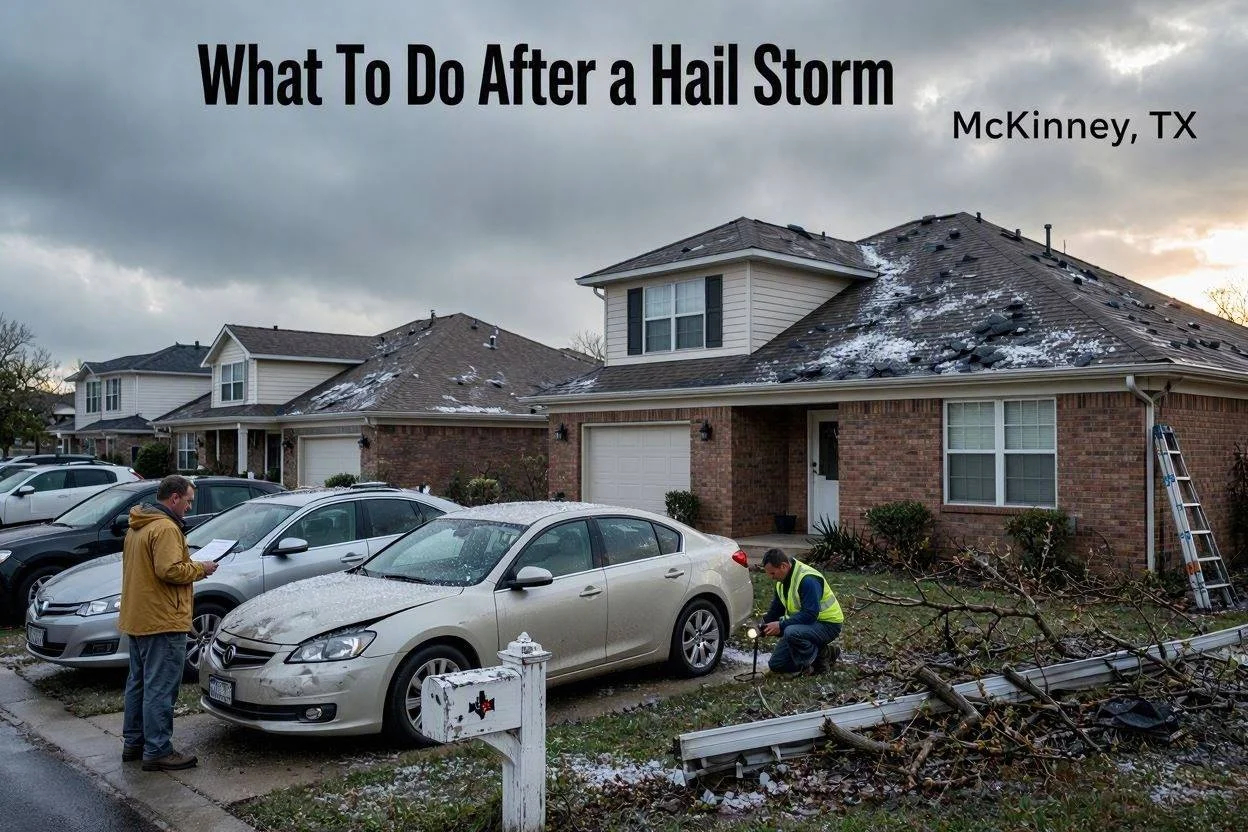
What To Do After a Hail Storm: A Homeowner’s Guide
A hailstorm can be over almost as quickly as it begins. One minute the weather is calm, and a short time later your yard, vehicles, gutters, and roof may be covered with signs of impact.
The difficult part is that roof damage isn’t always obvious. Some shingles may be visibly cracked or missing, while other damage can be small enough to go unnoticed from the ground.
Knowing what to do after a hail storm can help you protect your home, document the damage, and avoid turning a small roofing problem into a much larger one.
For homeowners in McKinney and throughout North Texas, taking a few sensible steps after severe weather can make the recovery process much easier.
1. Make Sure Everyone Is Safe First
Don’t rush outside while the storm is still active.
Hail can cause injuries, and severe thunderstorms may also bring lightning, strong winds, and falling branches. Wait until the weather has clearly passed before inspecting the property.
If another storm is approaching, stay inside and wait for safer conditions.
Your roof can be inspected later. Personal safety should come first.
2. Look Around Your Property From the Ground
Once conditions are safe, take a walk around the outside of your home.
You don’t need to climb onto the roof to start looking for signs of damage.
Check for:
- Shingles on the ground
- Cracked or damaged roofing materials
- Dented gutters
- Damaged downspouts
- Dented vents or flashing
- Broken windows
- Damaged siding
- Fallen branches
- Other obvious signs of impact
You can also look at nearby vehicles and outdoor equipment.
If hail has caused visible damage to cars, patio furniture, or other property, it may be worth paying closer attention to the roof as well.
3. Don’t Assume Your Roof Is Fine Because It Isn’t Leaking
One of the most common mistakes after a hailstorm is assuming that no leak means no damage.
That’s not necessarily true.
Hail can bruise asphalt shingles, knock away protective granules, crack roofing materials, or damage flashing without creating an immediate opening for water.
A roof can continue to appear functional while its condition has been weakened.
Problems may become more noticeable during the next heavy rainfall.
This is one reason a professional inspection can be useful after a significant hailstorm.
4. Check Your Attic and Ceilings
After the storm, take a quick look inside the house as well.
Check ceilings, walls, and the attic for signs of moisture.
Look for:
- Brown or yellow ceiling stains
- Damp insulation
- Water droplets
- Musty smells
- Wet areas around roof penetrations
- New discoloration on walls or ceilings
If you find active water intrusion, don’t ignore it.
Water can travel away from the original entry point, so the location of an interior stain doesn’t necessarily show exactly where the roof is damaged.
5. Take Photos and Videos
If you see visible damage, document it.
Take clear photographs of:
- Damaged shingles
- Missing roofing materials
- Gutters
- Downspouts
- Vents
- Flashing
- Broken windows
- Fallen branches
- Interior water damage
- Damaged personal property
Take wider photos showing the location as well as close-up photographs showing the actual damage.
If you’re dealing with an insurance claim, good documentation can be useful when explaining what happened.
Avoid putting yourself in danger just to get a better photograph.
6. Don’t Climb Onto the Roof Yourself
A damaged roof can be slippery and unsafe.
Hail, rain, loose shingles, and hidden structural problems can increase the risk of falling.
There’s also another issue: hail damage isn’t always easy to identify if you don’t know what you’re looking for.
A homeowner may see a few marks and assume the roof is fine, while a trained roofing professional may notice damaged areas that aren’t obvious from the ground.
A safer option is to arrange a professional inspection.
7. Have the Roof Professionally Inspected
If the hail was significant or you have reason to believe the roof was affected, arrange an inspection.
A roofing professional can examine areas such as:
- Shingles
- Valleys
- Flashing
- Roof edges
- Vents
- Chimneys
- Skylights
- Gutters
- Other roof penetrations
The purpose of an inspection isn’t automatically to recommend a new roof.
A good inspection should help answer a much more useful question:
What condition is the roof actually in after the storm?
If damage is minor, a repair may be enough. If the damage is widespread or the roof was already near the end of its service life, replacement may be worth considering.
8. Check for Temporary Water Intrusion
If you discover an active leak, the priority is preventing additional interior damage while professional help is arranged.
Move furniture, electronics, and other belongings away from the affected area.
Place a container under dripping water if necessary and document the affected area.
Don’t attempt major roof repairs during unsafe weather.
A roofing professional can determine whether temporary protection is needed until permanent repairs can be completed.
9. Contact Your Insurance Company if Appropriate
If you believe the storm caused significant damage, review your homeowners insurance policy and contact your insurance provider.
Insurance coverage varies between policies, so don’t assume that every type of storm damage will automatically be covered.
Your insurer can explain:
- Whether the damage may be covered
- Your deductible
- The claim process
- Required documentation
- Any deadlines or conditions that apply
A roofing contractor can inspect the roof and document visible damage, but the insurance company makes the final coverage decision.
10. Be Careful With Storm-Chasing Roofing Companies
After a major hailstorm, roofing companies may begin contacting homeowners directly.
Some may be legitimate local contractors. Others may travel from outside the area looking for storm-related work.
Don’t feel pressured to sign a contract immediately.
Before choosing a roofing contractor, ask for:
- Business information
- Proof of insurance
- Written estimate
- Scope of work
- Material details
- Warranty information
- References or examples of local work
Be cautious if someone insists that you need a completely new roof without conducting a proper inspection or explaining the damage.
11. Get a Detailed Roofing Estimate
If repairs or replacement are necessary, ask for a written estimate.
It should explain what work is being proposed and which materials will be used.
Depending on the condition of your roof, the estimate may include:
- Roof repairs
- Shingle replacement
- Flashing
- Underlayment
- Roof decking
- Ventilation
- Gutters
- Labor
- Debris removal
Don’t compare contractors based only on the final price.
A cheaper estimate isn’t necessarily a better deal if important parts of the roofing system are missing from the scope of work.
12. Decide Between Repair and Replacement
Hail damage doesn’t automatically mean your entire roof needs to be replaced.
A repair may make sense when the damage is limited and the existing roof is otherwise in good condition.
Replacement may be considered when:
- Damage is widespread
- The roof is already old
- There are repeated leaks
- Shingles are deteriorating throughout the roof
- The roof has suffered multiple previous repairs
- The underlying structure has significant damage
The right decision depends on the actual condition of the roofing system.
Why Hail Damage Can Become a Bigger Problem
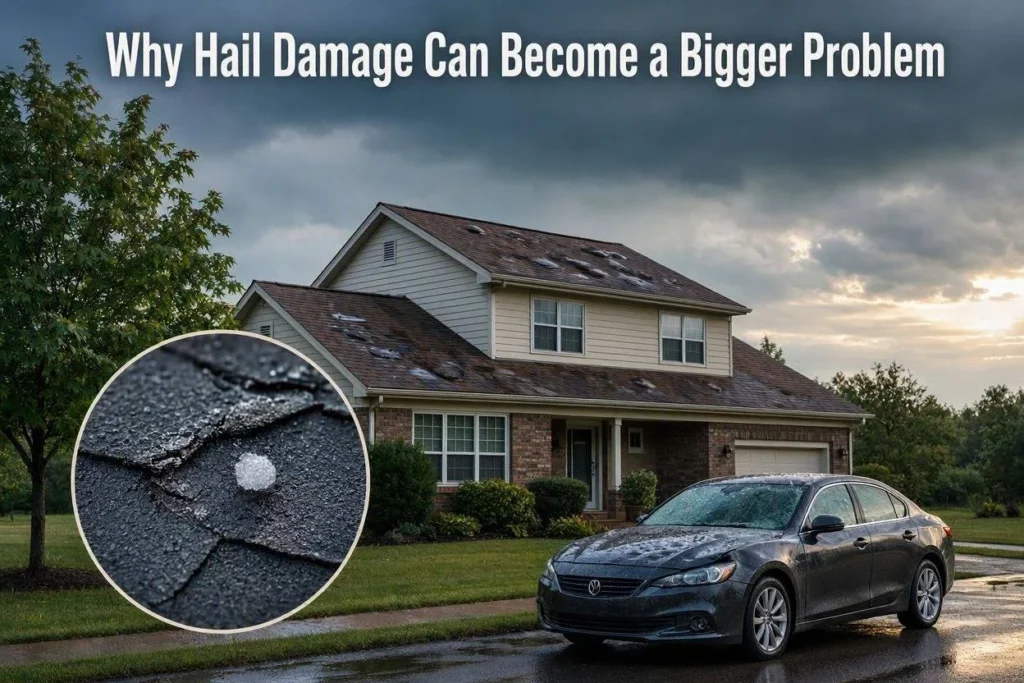
A small area of roof damage may not seem urgent.
However, damaged roofing materials can become more vulnerable to rain, sunlight, wind, and temperature changes.
If moisture gets beneath the roofing material, it can eventually affect:
- Roof decking
- Insulation
- Attic components
- Drywall
- Ceilings
- Interior finishes
The longer water is allowed to enter, the more complicated the repair can become.
That’s why addressing storm damage early is generally a sensible approach.
What If You Don’t See Any Damage?
It’s possible for a roof to look normal after a storm and still have damage.
If the hail was large, the storm was severe, or surrounding properties show obvious damage, consider having your roof checked.
This is particularly important if your roof is older or has already experienced previous storm damage.
You don’t need to assume there is a problem. An inspection simply gives you better information about the roof’s condition.
What To Do After a Hail Storm in McKinney
McKinney homeowners should pay particular attention to severe thunderstorms that bring large hail and strong winds.
After a significant storm:
First: Make sure everyone is safe.
Second: Check the property from the ground.
Third: Look inside for signs of water intrusion.
Fourth: Photograph visible damage.
Fifth: Arrange a professional roof inspection if you have concerns.
Sixth: Contact your insurance provider if appropriate.
Seventh: Compare roofing estimates before approving major work.
Following these steps can help you avoid making rushed decisions after a storm.
Frequently Asked Questions
What should I do immediately after a hailstorm?
Wait until the weather is safe, inspect the property from the ground, look for obvious damage, check inside for leaks, and photograph anything that appears damaged.
Should I inspect my roof after every hailstorm?
Not every storm causes roof damage. However, if the hail was large or the storm was severe, a professional inspection can help identify damage that isn’t visible from the ground.
Can hail damage a roof without causing a leak?
Yes. Hail can bruise shingles, remove granules, crack materials, or damage flashing without creating an immediate leak.
How can I tell if my roof has hail damage?
Look for damaged shingles, missing granules, dents in gutters or vents, cracked roofing materials, and other signs of impact. Some damage is difficult to identify without professional experience.
Should I climb onto my roof after a storm?
No. It’s safer to inspect the roof from the ground and have a professional evaluate areas that require closer examination.
Will my insurance cover hail damage?
It depends on your individual homeowners insurance policy and the circumstances of the damage. Contact your insurance provider to understand your coverage.
Do I need a new roof after hail damage?
Not necessarily. Some roofs can be repaired. Replacement depends on the extent of the damage, the age of the roof, and its overall condition.
How quickly should hail damage be repaired?
It’s best to address significant damage as soon as reasonably possible. Delaying repairs can allow water to enter and potentially cause additional damage.
What if my roof was damaged but there is no leak?
You should still consider an inspection if the storm was severe. Some roofing damage doesn’t create an immediate water leak.
Should I get more than one roofing estimate?
For a major repair or replacement, comparing estimates can help you understand the proposed work and pricing. Make sure each estimate covers a similar scope of work.
Final Thoughts
Knowing what to do after a hail storm can save you from unnecessary stress and potentially expensive repairs.
Start with safety. Once the weather has cleared, look around your property, document anything unusual, and check the inside of your home for signs of water intrusion.
Don’t climb onto the roof or assume that everything is fine simply because there isn’t a visible leak. Some hail damage is subtle and can become more serious over time.
If you’re unsure about the condition of your roof, a professional inspection can give you a much clearer picture.
For homeowners in McKinney, taking action after a major hailstorm is especially important. Getting the roof checked early can help you identify problems, understand your repair options, and protect your home from further weather-related damage.