
Insurance Claim Process After Hail Damage: Complete Guide for McKinney, TX
A severe hailstorm can damage your roof without leaving obvious signs from the ground. Shingles may lose protective granules, flashing can become damaged, and small impact marks can eventually lead to leaks.
For homeowners in McKinney, TX, understanding the insurance claim process after hail damage is important after a major storm. Knowing what to do, what to document, and when to contact your insurance company can make the process easier.
In this guide, we’ll explain the insurance claim process after hail damage step by step, including roof inspections, documentation, insurance adjusters, deductibles, repairs, roof replacement, and common mistakes to avoid.
Important: Insurance coverage varies by policy. This article provides general information and isn’t insurance or legal advice. Always review your policy and speak with your insurance provider about your specific situation.
What Happens After Hail Damages Your Roof?
Hail can cause different types of damage depending on the size of the hailstones, wind conditions, roofing material, roof age, and severity of the storm.
Damage may affect:
- Asphalt shingles
- Metal flashing
- Roof vents
- Ridge caps
- Gutters
- Downspouts
- Skylights
- Siding
- Windows
Some damage is immediately visible, while other problems may not become noticeable until the next heavy rain.
That’s why homeowners should take suspected hail damage seriously and consider a professional roof inspection.
Why Hail Damage Can Be Difficult to Identify
Hail damage isn’t always obvious.
A roof may look normal from the ground even though individual shingles have been impacted. Hail can damage the protective surface of shingles and weaken roofing materials over time.
A professional roofing contractor can inspect accessible areas and identify visible signs of storm damage.
Common Signs of Hail Damage
Look for:
- Cracked or broken shingles
- Missing shingles
- Granules collecting in gutters
- Damaged roof vents
- Dented metal flashing
- Damaged gutters
- Loose roofing materials
- Water stains inside the home
Never climb onto your roof after a storm. A wet or damaged roof can be dangerous.
Insurance Claim Process After Hail Damage
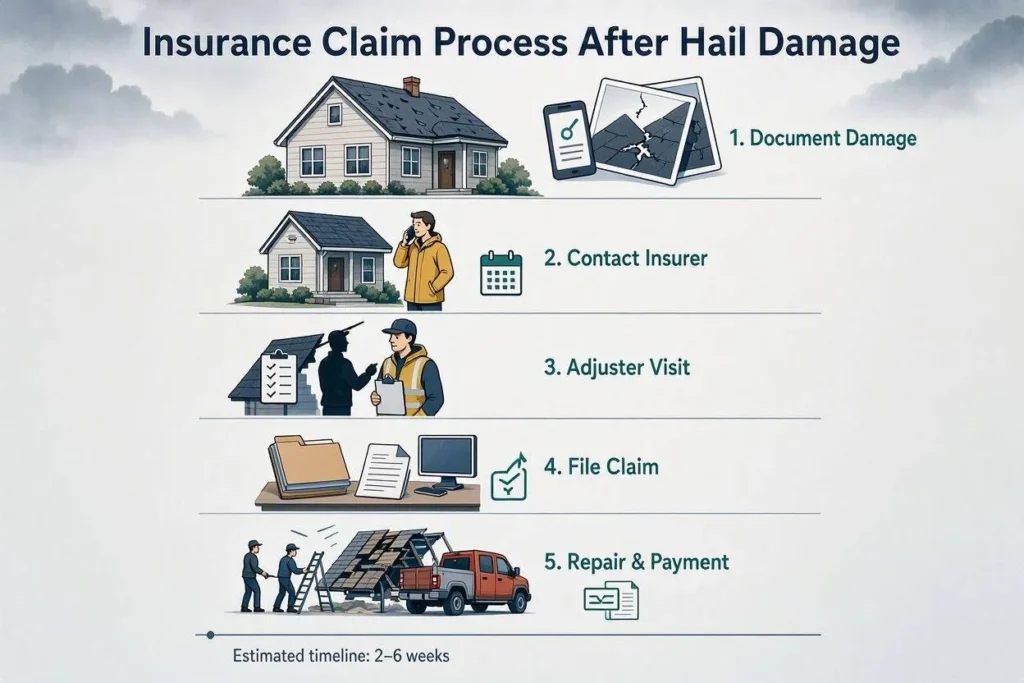
The insurance claim process after hail damage generally involves several important steps.
Step 1: Stay Safe After the Hailstorm
Your safety should be the first priority.
After a severe storm, inspect your property from the ground rather than climbing onto the roof.
Look for visible damage to:
- Roofing materials
- Gutters
- Siding
- Windows
- Exterior structures
If you notice serious damage, contact a professional roofing contractor for an inspection.
Step 2: Document the Hail Damage
Documentation is an important part of the insurance claim process after hail damage.
Take clear photos and videos of any visible damage.
Exterior Damage to Document
Photograph:
- Roof areas that are safely visible
- Gutters
- Downspouts
- Siding
- Windows
- Outdoor structures
- Fallen branches
Interior Damage to Document
Check for:
- Ceiling stains
- Water spots
- Wet drywall
- Peeling paint
- Damp insulation
- Signs of water intrusion
Keep all photographs, videos, receipts, inspection reports, and other documents related to the storm.
Step 3: Review Your Homeowners Insurance Policy
Before filing a claim, review your homeowners insurance policy.
Look for information about:
- Hail damage coverage
- Wind damage
- Roof coverage
- Deductibles
- Exclusions
- Reporting requirements
- Claim deadlines
- Roof age limitations
Not every insurance policy provides the same coverage.
If you don’t understand your coverage, contact your insurance company and ask for an explanation.
Step 4: Schedule a Professional Roof Inspection
A professional hail damage roof inspection can help identify problems that may not be visible from the ground.
A roofing professional may inspect:
- Shingles
- Flashing
- Ridge caps
- Roof valleys
- Vents
- Gutters
- Other visible roofing components
An inspection can help you understand the condition of your roof and determine whether repairs may be necessary.
Why Is a Roof Inspection Important?
Small areas of hail damage can become more serious when water gets underneath damaged roofing materials.
Getting the roof inspected after a significant hailstorm can help identify potential problems before they become expensive repairs.
Step 5: Contact Your Insurance Company
Once you’ve documented the damage and reviewed your policy, contact your insurance company.
Ask about the specific insurance claim process after hail damage for your policy.
Questions to Ask Your Insurance Company
Ask:
- Is hail damage covered?
- What is my deductible?
- How do I file a claim?
- What documents do you need?
- Is there a deadline for reporting the damage?
- Will an adjuster inspect the roof?
- What happens after the inspection?
Your insurer can explain the requirements for your individual policy.
Step 6: File Your Hail Damage Insurance Claim
If you decide to file a claim, provide the information requested by your insurance company.
You may need:
- Property information
- Date of the storm
- Description of the damage
- Photos
- Videos
- Inspection information
- Roofing estimates
- Other supporting documents
Keep copies of everything you submit.
Step 7: Meet With the Insurance Adjuster
After you file a claim, your insurance company may send an adjuster to inspect your property.
The adjuster evaluates the reported damage and determines how it relates to your policy.
The inspection may include:
- Roof
- Gutters
- Siding
- Windows
- Interior areas
- Other storm-damaged property
Have your photos, inspection report, and other documentation available.
Step 8: Review the Insurance Claim Decision
After the insurance inspection and evaluation, your insurance company will provide information about its claim decision.
Review the details carefully.
Pay attention to:
- Approved damage
- Repair or replacement amount
- Deductible
- Depreciation or settlement details
- Exclusions
- Additional documentation requirements
If you don’t understand the decision, contact your insurance provider and ask for clarification.
What Information Do You Need for a Hail Damage Insurance Claim?

Being organized can make the insurance claim process after hail damage easier.
Keep the following information together.
Photos and Videos
Take clear photographs of visible storm damage.
Roof Inspection Report
Keep a copy of your professional roof inspection.
Roofing Estimate
A written estimate can explain the recommended repair work and expected costs.
Storm Details
Record:
- Date of the storm
- Approximate time
- Weather conditions
- Visible damage
Insurance Information
Keep your:
- Policy information
- Claim number
- Adjuster’s contact information
- Insurance correspondence
Does Homeowners Insurance Cover Hail Damage?
Whether homeowners insurance covers hail damage depends on the terms of your specific policy.
Some policies may cover qualifying hail damage, while certain exclusions, deductibles, roof-age provisions, or other limitations may apply.
What Hail Damage May Be Covered?
Depending on the policy, qualifying damage from a sudden hailstorm may include damage to:
- Roofing materials
- Gutters
- Flashing
- Other covered property
What Roof Damage May Not Be Covered?
Policies may exclude or limit certain types of damage, such as:
- Normal wear and tear
- Long-term deterioration
- Lack of maintenance
- Certain pre-existing problems
Always confirm coverage with your insurance company.
How Much Does Hail Damage Roof Repair Cost?
There isn’t one fixed price for hail damage roof repair.
The cost can depend on:
- Roof size
- Roofing material
- Extent of damage
- Roof pitch
- Accessibility
- Labor
- Number of damaged areas
- Whether repair or replacement is needed
A professional inspection and written estimate can provide a better understanding of the potential repair cost.
Roof Repair vs. Roof Replacement After Hail Damage
Hail damage doesn’t automatically mean you need an entire new roof.
| Roof Condition | Possible Solution |
|---|---|
| A few damaged shingles | Roof repair |
| Limited flashing damage | Flashing repair |
| Localized hail damage | Repair |
| Extensive shingle damage | Possible replacement |
| Significant storm damage | Possible replacement |
| Structural damage | Professional evaluation |
The appropriate solution depends on the actual condition of the roofing system.
Will Insurance Pay for a New Roof After Hail Damage?
Insurance doesn’t automatically pay for a complete roof replacement simply because a roof has hail damage.
The decision can depend on:
- Your insurance policy
- Cause of damage
- Extent of damage
- Roof condition
- Deductible
- Coverage terms
- Insurance company’s claim determination
A roof with limited damage may only need repairs, while extensive covered damage may require replacement.
How Long Does a Hail Damage Insurance Claim Take?
The insurance claim process after hail damage doesn’t have one standard timeline.
The process may depend on:
- Severity of the storm
- Number of claims in the area
- Insurance company workload
- Adjuster availability
- Complexity of the damage
- Required documentation
- Scope of repairs
Simple claims may move faster than complicated claims involving extensive damage.
Keep records of all communications with your insurance company and roofing contractor.
Can You Repair Your Roof Before the Insurance Adjuster Arrives?

Whenever possible, avoid making major permanent repairs before the damage has been documented and your insurance company has provided instructions.
However, emergency measures may sometimes be necessary to prevent additional damage.
For example, if water is actively entering your home, temporary measures may be needed.
What Should You Do Before Repairs?
- Photograph the damage.
- Contact your insurance company.
- Ask about the claim process.
- Take reasonable steps to prevent additional damage.
- Keep receipts and documentation.
Common Mistakes to Avoid When Filing a Hail Damage Claim
Avoiding common mistakes can make the insurance claim process after hail damage easier.
Waiting Too Long to Report Damage
Don’t ignore suspected hail damage.
A small roofing problem can become worse when water enters the roof system.
Inspecting the Roof Yourself
Climbing onto a damaged roof can be dangerous.
Use a qualified roofing professional for a detailed inspection.
Failing to Document Damage
Take photographs and videos of visible damage as soon as it is safe to do so.
Assuming Every Hail Damage Claim Is Covered
Coverage depends on your individual insurance policy.
Don’t assume that every roofing problem will automatically be approved.
Starting Major Repairs Too Early
Whenever possible, document the damage and communicate with your insurer before starting major permanent repairs.
Signing a Contract Without Understanding It
Read roofing contracts carefully.
Make sure you understand:
- Scope of work
- Price
- Payment terms
- Warranty
- Insurance-related responsibilities
Ask questions before signing.
How to Protect Your Roof Before the Next Hailstorm
You can’t control the weather, but regular roof maintenance can help protect your home.
Schedule Regular Roof Inspections
Regular inspections can identify aging or damaged roofing materials.
Keep Gutters Clean
Clean gutters help rainwater drain away properly.
Trim Nearby Trees
Remove dead branches that could fall onto your roof during severe weather.
Repair Small Roofing Problems
Don’t ignore:
- Loose shingles
- Cracked shingles
- Damaged flashing
- Small leaks
Small problems can become more expensive when ignored.
Keep Roofing Records
Keep records of:
- Roof inspections
- Repairs
- Maintenance
- Roofing materials
- Previous insurance claims
Hail Damage Roof Inspection in McKinney, TX
McKinney homeowners can experience severe storms and hail that may affect residential roofing systems.
After a significant hailstorm, look for visible signs of damage and consider arranging a professional roof inspection in McKinney, TX.
A local roofing professional can evaluate the visible condition of your roof and explain what repairs may be needed.
If you’re unsure whether your roof has been affected by hail, an inspection can give you a better understanding of its condition.
Why Choose McKinney Roof Pros for Hail Damage?
When dealing with storm-related roofing problems, homeowners need a roofing company that understands local roofing conditions.
McKinney Roof Pros provides roofing services for homeowners in McKinney, TX.
Professional Roof Inspections
Identify potential roofing problems after storms and severe weather.
Hail Damage Roof Repair
Repair roofing components affected by hail when appropriate.
Storm Damage Roofing
Help homeowners address roofing problems after severe weather.
Emergency Roof Repair
Address urgent roofing problems that require immediate attention.
Roof Replacement
Provide roofing replacement services when a roof has reached the end of its useful life or has extensive damage.
Frequently Asked Questions About Hail Damage Insurance Claims
What is the insurance claim process after hail damage?
The general process involves documenting damage, reviewing your insurance policy, contacting your insurer, filing a claim, arranging an inspection, meeting with an adjuster, reviewing the claim decision, and completing approved repairs.
How do I know if my roof has hail damage?
Look for cracked or damaged shingles, missing granules, damaged gutters, dents in metal components, and other signs of storm impact. A professional inspection can identify damage that may not be visible from the ground.
Does homeowners insurance cover hail damage?
Some homeowners insurance policies cover qualifying hail damage. Coverage depends on the policy, deductible, exclusions, roof condition, and circumstances of the damage.
Should I contact my insurance company after a hailstorm?
If you suspect your property has been damaged, contact your insurance provider to understand your policy’s requirements and claim process.
Should I get a roof inspection after hail?
A professional roof inspection can help identify potential damage that isn’t obvious from the ground.
Will insurance replace my roof after hail damage?
Not necessarily. The insurance company’s decision depends on the policy, extent of damage, deductible, roof condition, and other claim factors.
How long does a hail damage insurance claim take?
The timeline varies depending on the insurance company, severity of the storm, number of claims, adjuster availability, documentation, and complexity of the damage.
Can I choose my own roofing contractor?
Insurance policies and claim procedures can vary. Ask your insurance company about its requirements and independently evaluate any roofing contractor before hiring them.
Conclusion
Understanding the insurance claim process after hail damage can help McKinney homeowners take the right steps after a severe storm.
Start by staying safe, documenting visible damage, reviewing your insurance policy, and contacting your insurance company. A professional roof inspection can also help identify damage that may not be obvious from the ground.
Don’t automatically assume that hail damage means you need a completely new roof. Some roofs may only need minor repairs, while extensive damage may require replacement.
The most important step is to address suspected damage instead of ignoring it. Early action can help prevent additional water damage and protect your home.