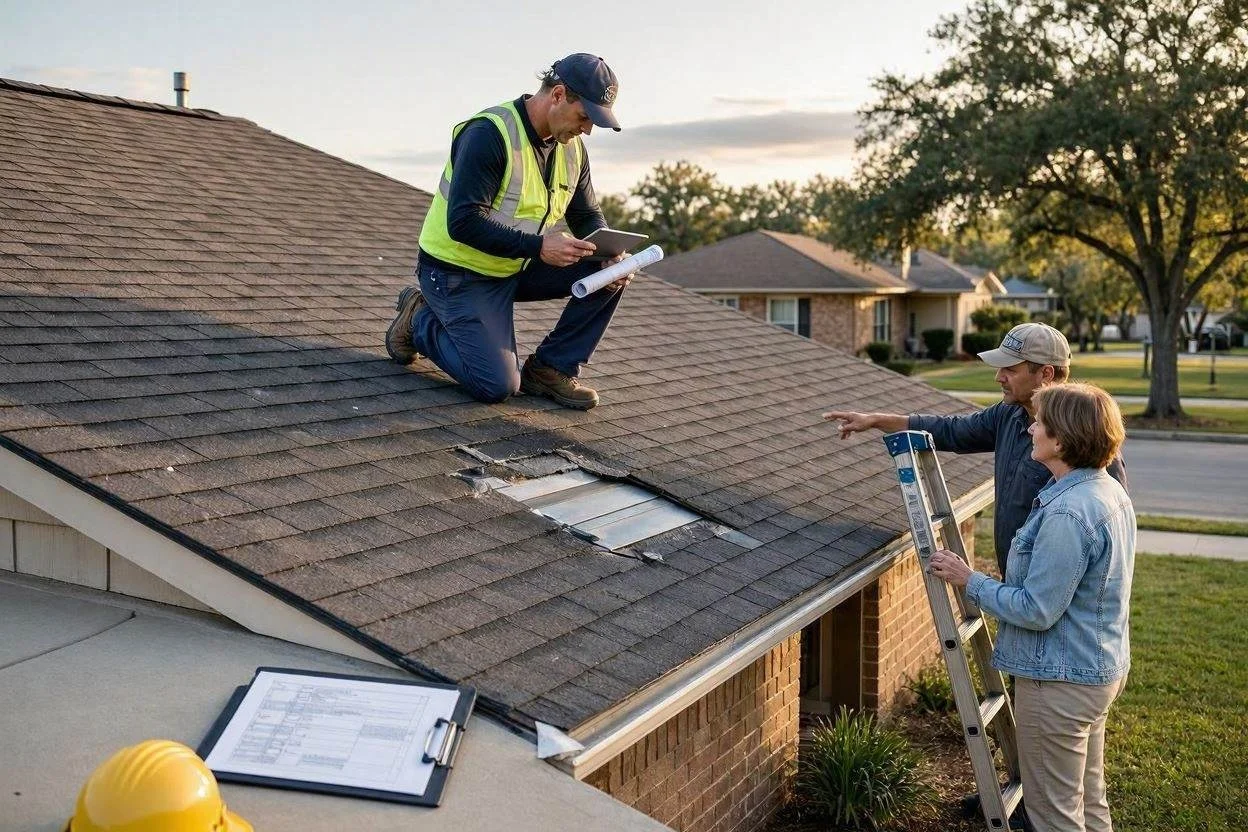
Roof Inspection Before Insurance Claim: What McKinney Homeowners Need to Know
When a severe hailstorm or windstorm damages your roof, one of the first questions you may have is whether you should get a roof inspection before an insurance claim.
For homeowners in McKinney, TX, getting the roof professionally inspected can be an important step after suspected storm damage. A proper inspection can help identify visible roofing problems, document the condition of your roof, and give you a better understanding of what repairs may be needed.
Hail damage isn’t always easy to see from the ground. Shingles can have impact damage, lose protective granules, or develop other problems that may not become obvious until later.
In this guide, we’ll explain why a roof inspection before an insurance claim can be useful, what happens during an inspection, what you should document, and how to prepare for the insurance claim process.
Important: Insurance coverage and claim procedures vary by policy and insurer. This article provides general information and isn’t insurance or legal advice.
Why Get a Roof Inspection Before an Insurance Claim?
A professional roof inspection can help you understand the actual condition of your roofing system before moving forward with an insurance claim.
After hail or wind damage, homeowners may notice:
- Missing shingles
- Cracked shingles
- Granule loss
- Damaged flashing
- Damaged vents
- Gutter damage
- Water stains
- Roof leaks
Some damage may be difficult to identify without professional experience.
A roof inspection before an insurance claim can help document visible conditions and provide information that may be useful when discussing the damage with your insurance company.
What Is a Roof Inspection?
A roof inspection is a professional evaluation of the condition of your roofing system.
Depending on the property and safety conditions, the inspection may evaluate:
- Shingles
- Flashing
- Roof valleys
- Ridge caps
- Vents
- Gutters
- Roof penetrations
- Visible roof decking
- Signs of water intrusion
The inspector may also look for signs of storm-related damage and general roof deterioration.
When Should You Schedule a Roof Inspection?
Timing can be important after a major storm.
After a Hailstorm
Hail can damage roofing materials even when the damage isn’t immediately visible.
After Strong Winds
Wind can loosen or remove shingles and damage flashing or other roof components.
After a Heavy Storm
Heavy rain can expose existing roofing problems and cause leaks.
When You Notice Interior Water Damage
Ceiling stains, damp insulation, or peeling paint may indicate a roof leak.
Before Filing an Insurance Claim
A roof inspection before an insurance claim can help you understand the condition of the roof and document visible problems.
What Does a Roof Inspection Look For?
A professional inspection can cover several important areas.
Damaged or Missing Shingles
Hail and wind can crack, loosen, or remove shingles.
Damaged shingles can allow water to reach the layers underneath.
Granule Loss
Asphalt shingles are covered with protective granules.
Hail impact and aging can cause granules to loosen.
Excessive granule loss can reduce the roof’s ability to protect against weather and UV exposure.
Damaged Flashing
Flashing protects vulnerable areas around:
- Chimneys
- Roof vents
- Skylights
- Valleys
- Other roof penetrations
Damaged flashing can contribute to water intrusion.
Damaged Roof Vents
Roof vents can also be affected by severe weather.
An inspection can identify visible dents, cracks, loose components, or other problems.
Gutter Damage
Hail can dent gutters and downspouts.
Gutters can also collect roofing granules after severe storms.
Signs of Water Intrusion
The inspector may look for signs such as:
- Water stains
- Damp areas
- Damaged insulation
- Moisture
- Ceiling discoloration
Should You Inspect Your Roof Before Filing an Insurance Claim?
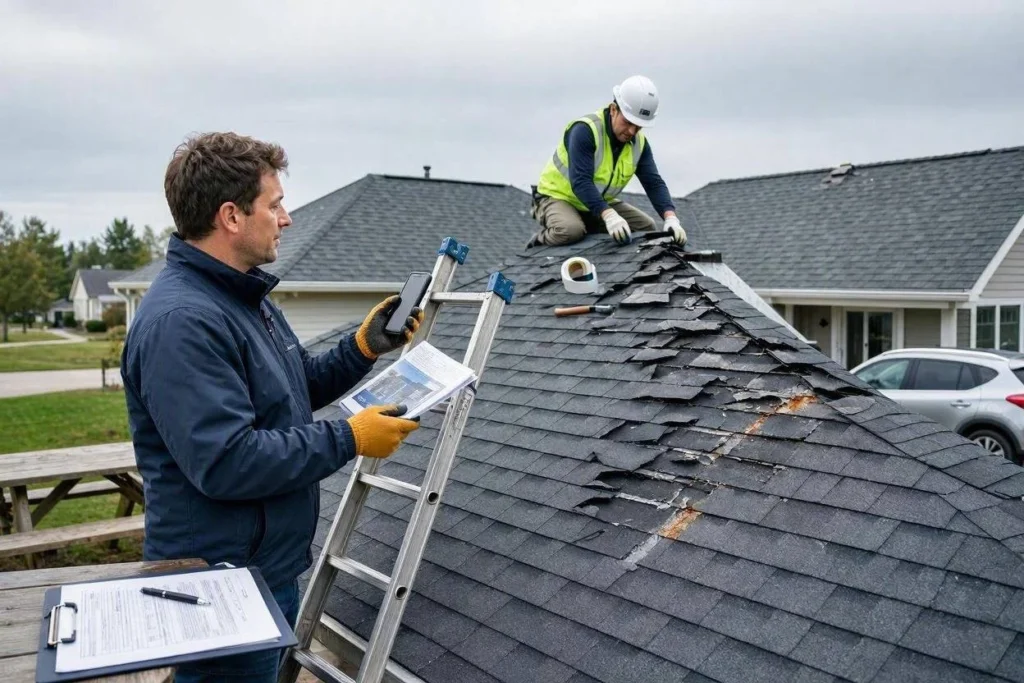
In many situations, getting a professional inspection first can help you understand what happened to the roof.
However, homeowners should also contact their insurance company to understand their specific claim requirements.
The best approach is to:
- Stay safe after the storm.
- Document visible damage.
- Arrange a professional roof inspection.
- Review your insurance policy.
- Contact your insurance company about the claim process.
- Follow your insurer’s instructions.
Insurance policies can have different reporting requirements, so don’t assume every claim follows the same procedure.
How to Document Roof Damage Before an Insurance Claim
Good documentation can help you keep track of the condition of your property.
Take Photos
Photograph visible damage from safe locations.
Take pictures of:
- Roofing materials
- Gutters
- Downspouts
- Siding
- Windows
- Exterior structures
Take Videos
A video can provide additional context about the property’s condition after the storm.
Document Interior Damage
If water entered your home, photograph:
- Ceiling stains
- Wet drywall
- Peeling paint
- Water spots
- Damaged insulation
Record the Storm Date
Write down:
- Date of the storm
- Approximate time
- Type of weather
- When you first noticed the damage
Keep all documentation in one place.
What Happens During a Roof Inspection?
A professional roofing inspection generally begins with an evaluation of the roof’s visible condition.
The inspector may examine different areas of the roofing system for:
- Storm damage
- Missing materials
- Cracks
- Impact marks
- Granule loss
- Flashing problems
- Water intrusion
- General deterioration
The inspection process depends on the roof type, accessibility, property condition, and safety requirements.
What Should You Ask Your Roofing Inspector?
Before or during the inspection, ask questions such as:
Is There Visible Storm Damage?
Ask whether the inspector found signs consistent with hail or wind damage.
Are There Active Leaks?
Ask whether there are signs of water intrusion.
Does the Roof Need Repair?
Find out whether the damage appears localized or widespread.
Does the Roof Need Replacement?
Don’t assume replacement is necessary. Ask the inspector to explain the condition of the roofing system.
Can You Provide Written Documentation?
A written inspection report or estimate may help you keep organized records.
Roof Inspection vs. Insurance Adjuster Inspection
These two inspections serve different purposes.
Roofing Contractor Inspection
A roofing contractor evaluates the physical condition of the roof and identifies visible roofing damage or repair needs.
Insurance Adjuster Inspection
An insurance adjuster evaluates the reported damage in relation to the insurance policy and claim.
The insurance company determines coverage based on the policy and circumstances of the loss.
A roofing contractor does not decide whether your insurance claim will be approved.
Can a Roof Inspection Help With an Insurance Claim?
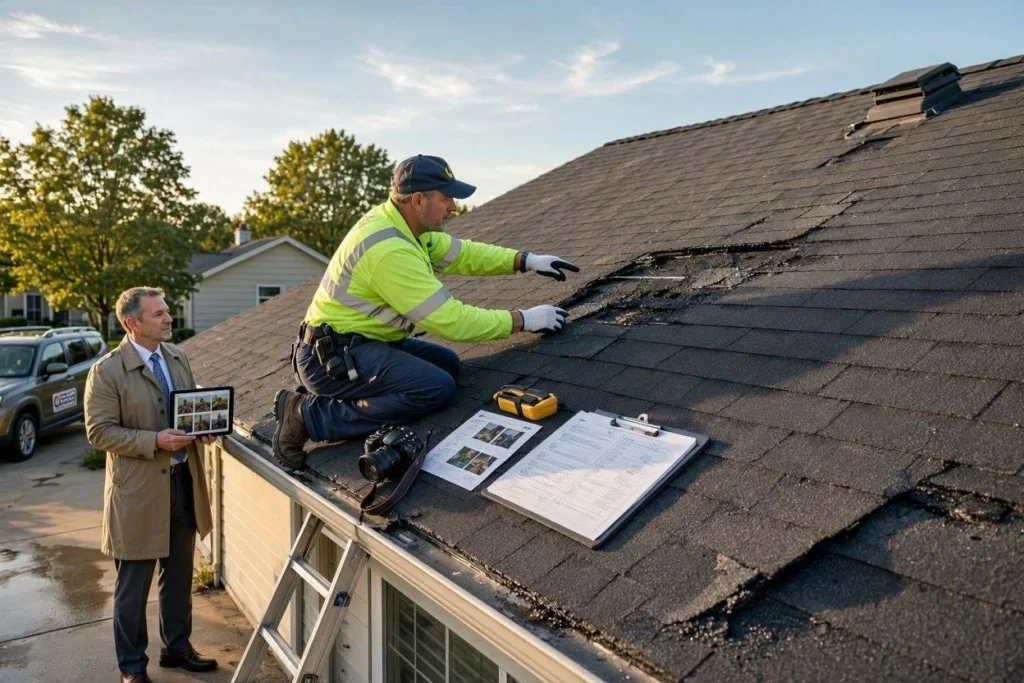
A roof inspection can provide useful information about the condition of your roof.
It may help you understand:
- Where damage is located
- What roofing materials are affected
- Whether repairs may be necessary
- Whether there are signs of storm damage
- What additional areas should be documented
However, an inspection does not guarantee that an insurance claim will be approved.
Coverage decisions are made by the insurance company according to the applicable policy.
What If the Roof Inspection Finds No Hail Damage?
Sometimes a professional inspection may not identify significant storm damage.
That doesn’t necessarily mean the inspection was unnecessary.
It can help you understand:
- Current roof condition
- Age-related deterioration
- Maintenance needs
- Existing roofing problems
- Areas that may need monitoring
If no significant damage is found, you may not need to file a claim.
What If the Roof Inspection Finds Hail Damage?
If the inspection identifies potential hail damage, document the findings and contact your insurance company about the next steps.
You may need:
- Inspection documentation
- Photos
- Repair estimate
- Storm information
- Insurance policy details
Follow your insurance company’s instructions regarding the claim process.
Roof Repair or Roof Replacement After an Inspection?
A roof inspection doesn’t automatically mean you need a new roof.
Roof Repair May Be Appropriate When:
- Damage is limited
- Only a few shingles are affected
- Flashing needs repair
- A small area has storm damage
Roof Replacement May Be Considered When:
- Damage is widespread
- The roofing system is severely deteriorated
- There is significant structural damage
- The roof has reached the end of its useful life
The appropriate solution depends on the actual condition of the roof.
Common Mistakes Homeowners Make Before an Insurance Claim
Climbing Onto the Roof
Don’t put yourself at risk to inspect storm damage.
Waiting Too Long
If you suspect storm damage, don’t simply ignore it.
Not Taking Photos
Document visible damage as soon as it is safe.
Assuming Insurance Will Pay
Coverage depends on your policy.
Starting Major Repairs Without Documentation
Whenever possible, document the damage and contact your insurance company before permanent repairs.
If emergency repairs are necessary to prevent additional damage, keep photographs, receipts, and other records.
Roof Inspection After Hail Damage in McKinney, TX
McKinney homeowners can experience severe storms and hail that may affect residential roofing systems.
After a significant storm, homeowners should look for visible signs of damage from a safe location.
A professional roof inspection in McKinney, TX can help identify potential problems and provide a clearer picture of your roof’s condition.
Common storm-related roofing concerns include:
- Hail impact
- Wind-damaged shingles
- Damaged flashing
- Granule loss
- Gutter damage
- Roof leaks
If you’re unsure whether your roof was affected, a professional inspection can be a useful first step.
How to Prepare for a Roof Inspection
Before the roofing professional arrives, gather any information you have about the property.
Prepare Photos
Have storm and property photos available.
Note Any Leaks
Write down where and when you noticed water intrusion.
Record the Storm Date
Knowing approximately when the storm occurred can help organize your records.
Keep Previous Roofing Records
If available, gather:
- Previous inspection reports
- Repair invoices
- Roof installation information
- Maintenance records
Why Choose McKinney Roof Pros for a Roof Inspection?
If you need a roof inspection before an insurance claim in McKinney, TX, McKinney Roof Pros can evaluate the visible condition of your roofing system.
Our roofing services include:
- Roof Inspections
- Roof Repair
- Hail Damage Roof Repair
- Storm Damage Roofing
- Emergency Roof Repair
- Roof Replacement
- Residential Roofing
The goal is to help homeowners understand their roofing problems and make informed decisions about necessary repairs.
Frequently Asked Questions About Roof Inspections and Insurance Claims
Should I get a roof inspection before an insurance claim?
A professional inspection can help you understand the condition of your roof and document visible damage. You should also contact your insurance company to understand its specific claim requirements.
What does a roof inspection look for?
A roof inspection can look for damaged shingles, missing materials, flashing problems, granule loss, damaged vents, leaks, water intrusion, and other visible roofing concerns.
Can a roof inspection guarantee an insurance claim?
No. A roof inspection can document physical conditions, but the insurance company determines coverage based on the applicable policy.
Should I inspect my roof myself after hail?
Avoid climbing onto a damaged or wet roof. Instead, inspect the property from the ground and use a qualified professional for a detailed roof inspection.
What should I do before filing a roof insurance claim?
Document visible damage, arrange a professional inspection, review your insurance policy, and contact your insurance company to understand its claim process.
Does hail damage always require a roof replacement?
No. Some hail damage may require only localized repairs. Replacement depends on the extent of damage, roof condition, and other factors.
How long does a roof inspection take?
The time can vary depending on the size, type, accessibility, and condition of the roof.
What should I do if I find a roof leak after a storm?
Document the leak and visible damage, take reasonable steps to prevent additional damage, and contact your insurance company and a qualified roofing professional.
Conclusion
Getting a roof inspection before an insurance claim can help McKinney homeowners understand the condition of their roofing system after hail, wind, or severe weather.
A professional inspection can identify visible damage, document roofing conditions, and help you understand whether repairs may be necessary.
Remember that a roofing inspection and an insurance inspection are not the same thing. A roofing contractor evaluates the physical condition of the roof, while the insurance company determines coverage according to the policy.
If you suspect storm damage, don’t wait until a small roofing problem becomes a major leak.