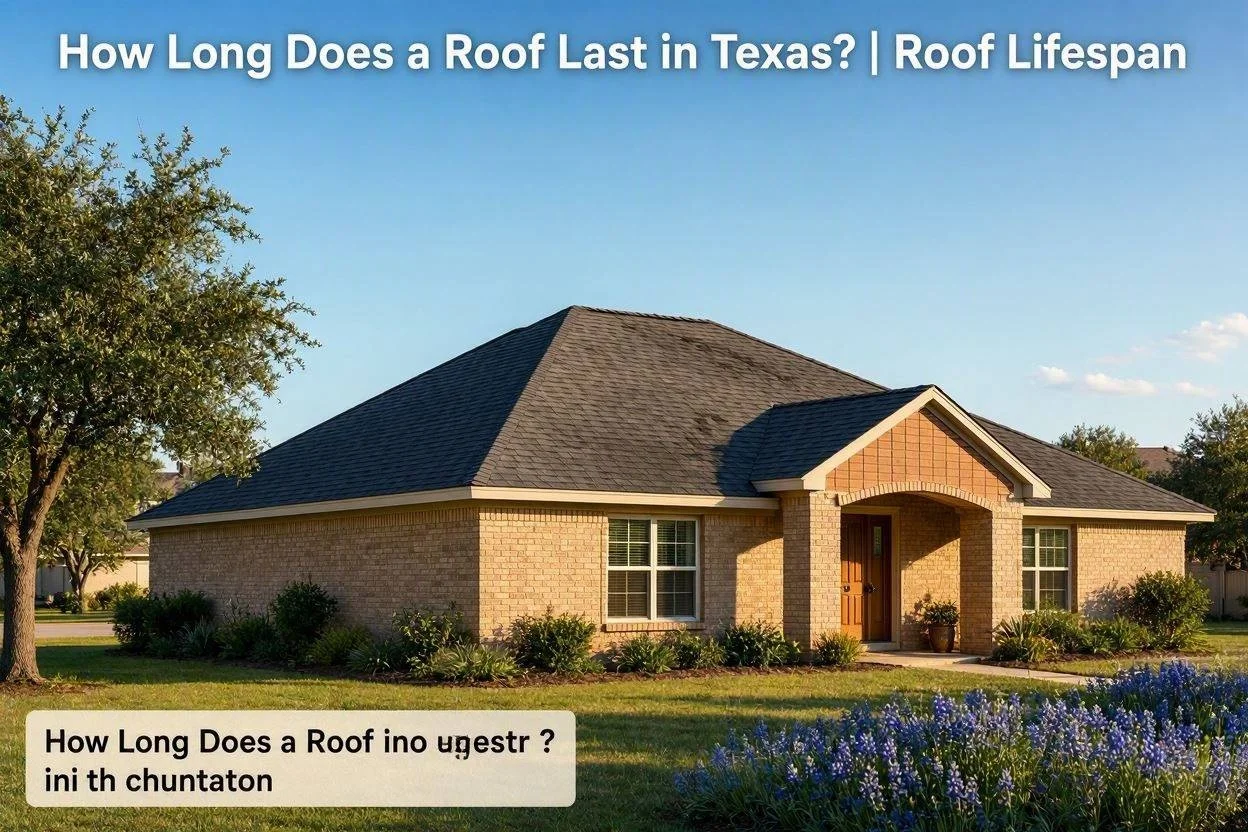
How Long Does a Roof Last in Texas? A Homeowner’s Guide
If you’re looking at an aging roof and wondering whether it still has a few good years left, you’re not alone. Roof lifespan varies quite a bit from one home to another. The material, installation, maintenance, ventilation, and local weather all play a part.
Texas adds another challenge. Long, hot summers, intense sunlight, hail, strong winds, and heavy storms can put considerable stress on a roofing system. A roof that might perform well for decades in a mild climate may need attention sooner in North Texas.
So, how long does a roof last in Texas? For most homeowners, the answer depends first on the type of roofing material and then on how well that roof has been installed and maintained.
Average Roof Lifespan by Material
There isn’t a single expiration date for every roof. Different materials have very different expected service lives.
| Roofing Material | Typical Lifespan |
|---|---|
| 3-tab asphalt shingles | 15–20 years |
| Architectural asphalt shingles | 20–30 years |
| Metal roofing | 40–70 years |
| Concrete tile | 40–60 years |
| Clay tile | 50+ years |
| Slate | 75–100+ years |
These ranges are estimates, not guarantees. Severe weather, poor ventilation, installation problems, and neglected maintenance can shorten the useful life of any roofing system.
Why Texas Weather Can Shorten Roof Life
A roof in Texas has to deal with more than ordinary rain.
Summer Heat and UV Exposure
The combination of high temperatures and strong sunlight can gradually age roofing materials. Asphalt shingles, for example, can become brittle, lose granules, or start curling as they get older.
Heat also makes attic ventilation important. When hot, humid air cannot escape properly, the entire roofing system can be exposed to unnecessary stress.
Hail
Hail is one of the biggest concerns for homeowners in North Texas. A storm doesn’t have to leave a dramatic hole in the roof to cause problems.
Hail impacts can bruise shingles, knock off protective granules, crack materials, or damage flashing. Some of these problems aren’t obvious from the ground.
If your home has recently been through a significant hailstorm, an inspection is worth considering even if you haven’t noticed a leak.
High Winds
Strong thunderstorms can lift shingles, loosen roofing components, and damage areas around vents and flashing.
Installation quality matters here. Proper fastening can make a significant difference in how a roof performs during high winds.
Heavy Rain
A sound roof should handle normal rainfall without trouble. Problems start when water finds an opening created by damaged shingles, worn flashing, blocked drainage, or deteriorated underlayment.
Once moisture gets beneath the surface, damage can spread to the decking, insulation, and interior of the home.
How Long Do Asphalt Shingle Roofs Last in Texas?
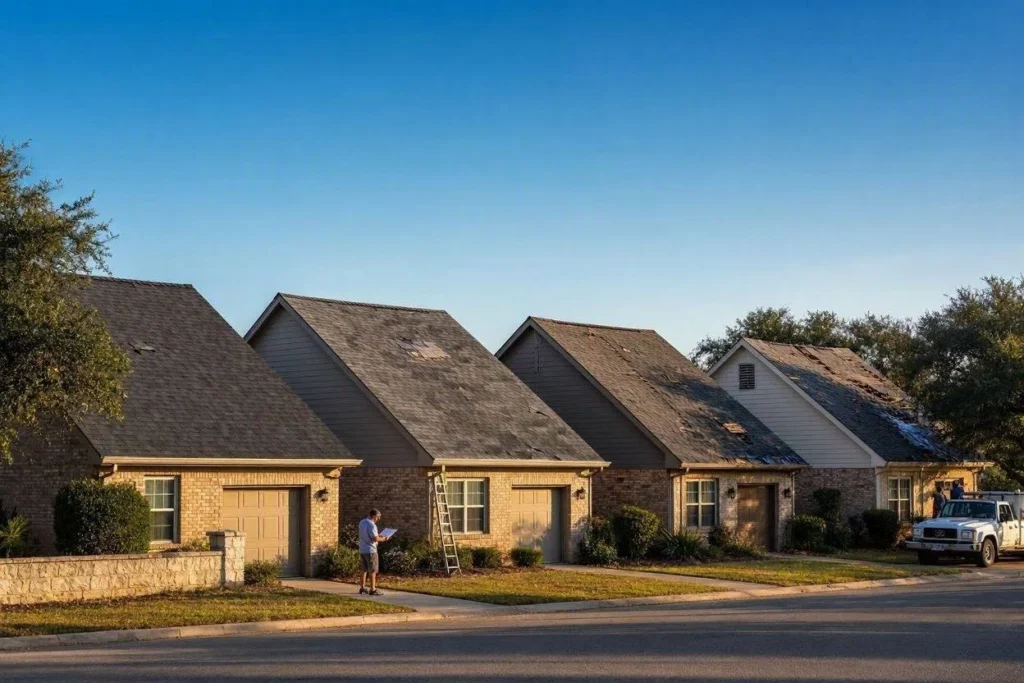
Asphalt shingles are widely used on Texas homes because they offer a practical combination of price, appearance, and performance.
Basic 3-tab shingles generally have a shorter service life, often around 15 to 20 years. Architectural shingles can last around 20 to 30 years when they’re properly installed and maintained.
But age alone doesn’t tell the whole story.
An asphalt roof that’s 18 years old and still in good condition may have useful life remaining. Another roof that’s only 12 years old could need major work after repeated hailstorms or installation problems.
Watch for signs such as:
- Curling or cracked shingles
- Missing shingles
- Heavy granule loss
- Repeated leaks
- Damaged flashing
- Dark or deteriorated areas
- Shingles that look noticeably worn
If several of these issues are appearing at once, it’s time to have the roof evaluated.
How Long Does a Metal Roof Last in Texas?
Metal roofing is a longer-term option. Depending on the metal, coating, installation, and maintenance, a properly installed metal roof can last roughly 40 to 70 years.
That longevity is one reason metal has become an attractive option for homeowners who don’t want to replace their roof every couple of decades.
Metal also performs well in hot weather and can reflect a substantial amount of solar energy. It’s resistant to fire and can provide strong wind performance when the system is correctly installed.
The trade-off is the upfront cost. Metal roofing generally costs more initially than asphalt shingles, so homeowners need to consider both their current budget and how long they plan to stay in the property.
How Long Do Tile Roofs Last?
Clay and concrete tile can provide very long service lives.
Clay tile can last 50 years or more, while concrete tile commonly has an expected lifespan of around 40 to 60 years. Both materials are well suited to hot climates and can offer excellent durability.
The downside is that tile is heavier than asphalt shingles and can be more expensive to install. Individual tiles can also crack after significant impact, including severe hail.
What Actually Determines a Roof’s Lifespan?
Two houses with the same roofing material don’t necessarily get the same number of years from their roofs.
Several factors make a difference.
Installation Quality
A roof is only as good as its installation. Problems with flashing, fastening, underlayment, ventilation, or drainage can lead to premature failure.
This is one reason choosing an experienced roofing contractor matters when installing a new roof.
Attic Ventilation
Your attic needs a proper balance of intake and exhaust ventilation.
Excessive heat and trapped moisture can contribute to roofing deterioration and create other problems inside the home.
Maintenance
Small issues are much easier to deal with when they’re caught early.
Regular maintenance should include checking gutters, flashing, vents, shingles, and areas where debris collects.
Storm History
A roof that has gone through several hail or wind events may have more wear than its age suggests.
A professional inspection can help determine the roof’s current condition rather than relying on its installation date alone.
Roofing Material
Material remains one of the biggest factors. A homeowner with an asphalt shingle roof shouldn’t expect the same lifespan as someone with a quality metal or slate roof.
Signs Your Roof May Be Near the End
You don’t necessarily need to replace a roof just because it’s getting old. However, certain warning signs deserve attention.
Frequent Leaks
One isolated leak can sometimes be repaired. Repeated leaks in different parts of the house are more concerning and may indicate broader deterioration.
Curling or Buckling Shingles
Shingles should generally lie flat. Widespread curling or buckling can indicate age, heat exposure, ventilation problems, or other issues.
Granules in the Gutters
Asphalt shingles naturally lose some granules over time. A noticeable increase in granules collecting in your gutters can be a sign that the shingles are wearing out.
Missing Shingles
Missing shingles leave parts of the roofing system exposed. A few can often be replaced, but widespread loss may point toward a larger problem.
Sagging
A visibly sagging section should not be ignored. It can indicate moisture damage or an underlying structural issue and should be inspected by a professional.
Daylight in the Attic
If you can see daylight coming through gaps in the roof deck, water may be able to enter through those same openings.
Does a 20-Year-Old Roof Always Need Replacement?
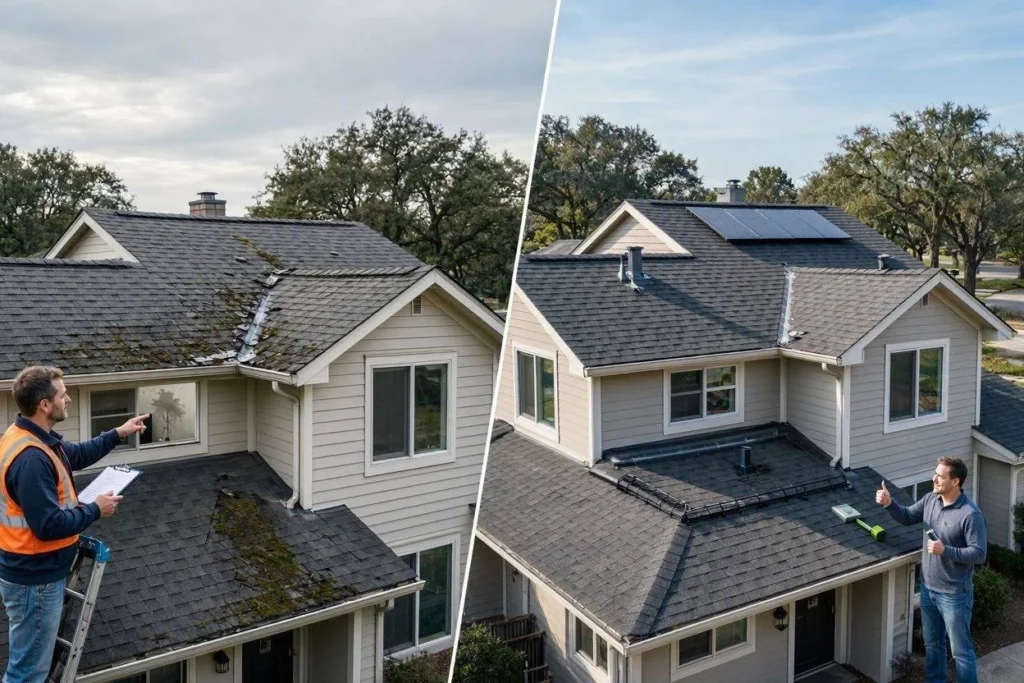
A roof’s age is useful information, but it shouldn’t be the only reason for replacement.
For example, a well-maintained architectural shingle roof approaching 20 years may still be performing reasonably well. On the other hand, a younger roof with extensive storm damage or repeated leaks may need replacement much sooner.
The better question isn’t simply, “How old is my roof?”
What condition is my roof in today, and how much useful life does it realistically have left?
That’s where a professional inspection can be valuable.
Roof Repair or Full Replacement?
Sometimes a repair is all that’s necessary. In other cases, replacing the entire system makes more financial sense.
Repair may make sense when:
- Damage is limited to a small area
- The roof is relatively young
- Most shingles remain in good condition
- There are no major structural concerns
- The problem has a clear and localized cause
Replacement may be worth considering when:
- The roof is approaching the end of its expected lifespan
- Damage is spread across a large portion of the roof
- Leaks keep coming back
- Shingles are deteriorating throughout the roof
- The decking has significant moisture damage
- Repair costs are becoming frequent or substantial
A good roofing contractor should explain both options rather than automatically recommending the most expensive one.
How to Get More Life From Your Roof
You can’t control Texas weather, but you can control how you respond to it.
A few simple habits can make a difference:
- Keep gutters clear. Water needs a clear path away from the roof.
- Trim branches near the house. Overhanging limbs can scrape shingles or fall during storms.
- Deal with small damage promptly. A missing shingle is much easier to address than the water damage it can eventually cause.
- Inspect after major storms. Hail and wind damage isn’t always visible from the driveway.
- Maintain attic ventilation. Proper airflow helps manage heat and moisture.
- Don’t skip professional inspections. An experienced roofer can spot problems that aren’t obvious to an untrained eye.
When Should You Replace a Roof in Texas?
There’s no universal replacement year that applies to every Texas home.
Instead, look at the combination of age, material, condition, repair history, and storm exposure.
An older roof with widespread deterioration is usually a stronger replacement candidate than an older roof that’s been well maintained and remains in good shape.
Likewise, a relatively new roof with serious hail or wind damage may need attention sooner than expected.
The goal is to replace the roof before a manageable problem turns into interior water damage or a structural repair.
Frequently Asked Questions
How long does a roof last in Texas?
It depends on the material. Asphalt shingle roofs commonly last around 15–30 years, while metal roofing can last roughly 40–70 years. Tile and slate can last considerably longer.
Does Texas heat reduce roof lifespan?
It can. Prolonged heat and UV exposure gradually affect roofing materials. Proper ventilation and choosing materials suited to the climate can help reduce premature deterioration.
How long do asphalt shingles last in Texas?
Basic asphalt shingles often last around 15–20 years. Higher-quality architectural shingles can commonly reach around 20–30 years with proper installation and maintenance.
Is a metal roof a good choice for Texas?
Metal can be an excellent option for Texas homes. It offers a long service life, good weather resistance, and strong performance in hot conditions.
How often should a Texas roof be inspected?
An inspection is particularly useful after significant hail or windstorms and as a roof gets older. Regular professional inspections can help identify problems before they become expensive.
Can hail damage shorten a roof’s lifespan?
Yes. Repeated hail impacts can damage shingles and other roofing components. Some damage may not be obvious from the ground.
Should I replace my roof before it starts leaking?
Not necessarily. However, if an aging roof already shows widespread deterioration, replacing it before a major leak can prevent more expensive damage to the home’s interior.
What is the longest-lasting roofing material?
Slate can last 75–100 years or more under suitable conditions. Metal and tile can also provide several decades of service.
Does regular maintenance extend roof life?
Proper maintenance can help a roof reach its expected service life by catching leaks, damaged shingles, drainage problems, and other issues before they become more serious.
Final Thoughts
So, how long does a roof last in Texas? There’s no single number that works for every home.
An asphalt shingle roof may serve a homeowner well for 15 to 30 years, while metal, tile, and slate can last much longer. The actual result depends on the material, installation, ventilation, maintenance, and what the roof has been through over the years.
For homeowners in McKinney and the surrounding North Texas area, storm exposure deserves particular attention. A roof can look fine from the street and still have damage that needs to be addressed.
If you’re unsure whether your roof needs a repair or replacement, getting an inspection is a much better starting point than guessing based on age alone.