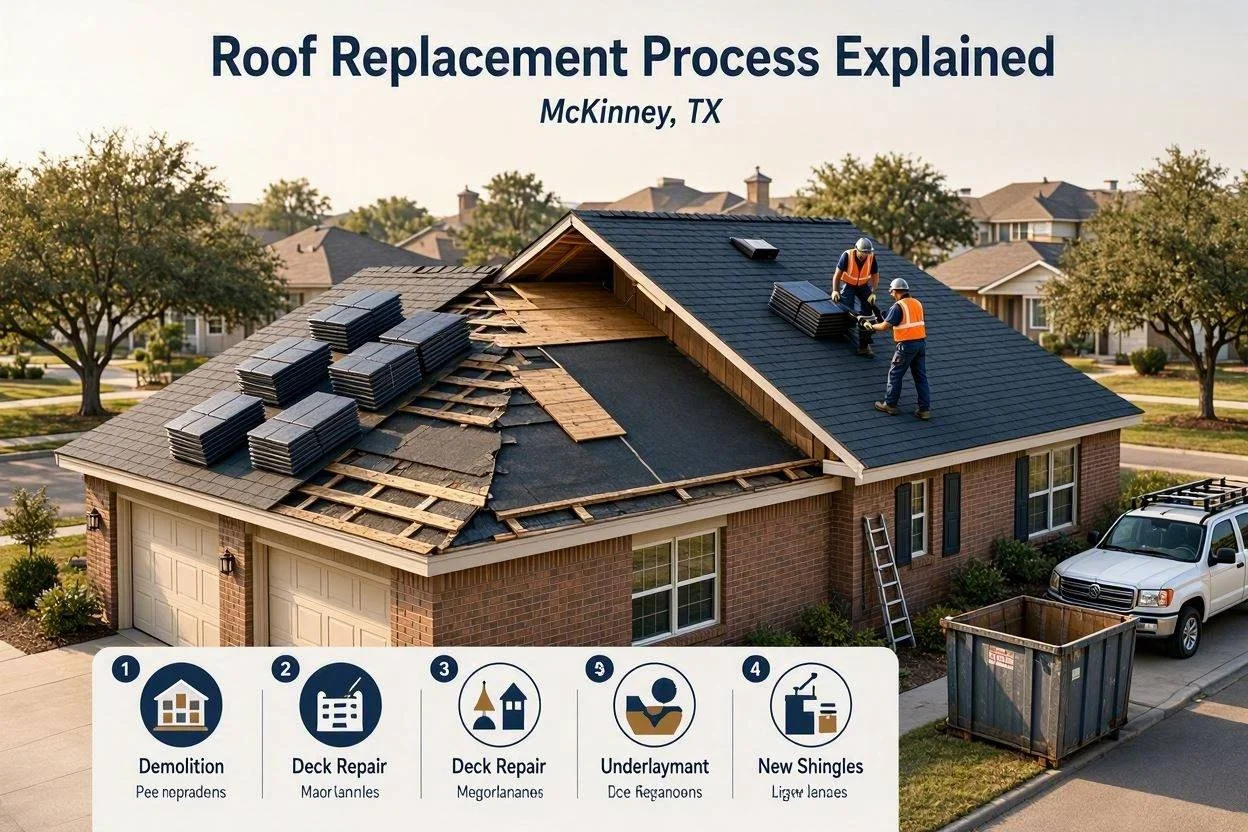
Roof Replacement Process Explained: What McKinney Homeowners Should Expect
Replacing a roof is a major home improvement project, but it doesn’t have to be confusing. Once you know what happens at each stage, it’s much easier to prepare your home, compare estimates, and understand what your roofing contractor is doing.
For homeowners in McKinney, Texas, the process can also involve factors such as hail damage, strong winds, extreme summer heat, and local building requirements. A well-planned roof replacement should address the condition of the existing roof as well as the long-term needs of the home.
This guide explains the roof replacement process from the first inspection through the final cleanup.
1. Schedule a Roof Inspection
The process usually begins with an inspection.
A roofing professional examines the roof to determine its overall condition. They’ll typically look for damaged or missing shingles, deteriorated flashing, leaks, signs of moisture, damaged decking, and other issues that could affect the roofing system.
The inspection also helps determine whether the roof actually needs to be replaced or whether a repair could solve the problem.
This is an important first step because replacing a roof unnecessarily can be expensive, while delaying a necessary replacement can lead to more serious damage.
2. Discuss Your Roofing Options
Once the condition of the roof is understood, you’ll need to decide what type of roofing system is right for your home.
Common options include:
- Asphalt shingles
- Architectural shingles
- Metal roofing
- Tile roofing
- Other specialty roofing materials
Your budget, home’s design, expected lifespan, maintenance requirements, and local weather should all be considered.
For many McKinney homeowners, asphalt shingles are a practical choice because they offer a balance between cost and performance. Metal roofing can be worth considering when durability and long-term service life are higher priorities.
3. Receive and Review the Estimate
Before work begins, you should receive a detailed estimate from the roofing contractor.
A good estimate should make it clear what you’re paying for. Depending on the project, it may include:
- Removal of existing roofing
- New roofing materials
- Underlayment
- Flashing
- Ventilation components
- Roof decking repairs, if needed
- Labor
- Cleanup
- Disposal of old materials
Don’t compare estimates based only on the final price. Two contractors can provide very different roofing systems while using similar-looking numbers on the quote.
Ask questions if anything isn’t clear before signing an agreement.
4. Choose the Roofing Materials
After approving the project, the materials are selected and ordered.
The choice can include the shingle style, color, flashing, ventilation products, underlayment, and other components of the roofing system.
For asphalt shingles, homeowners may choose between basic three-tab products and architectural shingles. Architectural shingles generally provide a more dimensional appearance and can offer different performance characteristics depending on the product.
Your contractor should explain what products are being installed rather than leaving you uncertain about what you’re paying for.
5. Prepare the Property
Before installation begins, some preparation around the house may be necessary.
Roof replacement can create noise and falling debris, so it’s a good idea to move fragile items away from exterior walls and secure outdoor belongings.
Your roofing crew may also protect landscaping, windows, doors, and other areas around the property before removing the old roof.
If you have pets or young children, plan ahead for the noise and activity during the project.
6. Remove the Old Roofing
Once the work starts, the existing roofing materials are typically removed so the underlying roof can be inspected.
This stage is sometimes called a roof tear-off.
Removing the old material allows the contractor to see what’s underneath rather than simply covering existing problems with another layer of roofing.
The crew will inspect the exposed roof deck for areas that are damaged, weakened, or affected by moisture.
7. Inspect and Repair the Roof Deck
The roof deck provides the structural surface underneath the roofing materials.
If damaged decking is discovered during the tear-off, those sections may need to be replaced before the new roof is installed.
This can affect the final project cost, which is why homeowners should understand that unexpected decking repairs are possible during a roof replacement.
A strong foundation underneath the new roofing materials is important for the performance and longevity of the finished roof.
8. Install Underlayment and Water Protection
After the roof deck is ready, the contractor installs the appropriate underlayment and other water-protection components.
Underlayment sits beneath the shingles or other roofing material and provides an additional layer of protection against moisture.
Flashing is also installed or replaced around areas where water could enter, including roof valleys, chimneys, vents, skylights, and other roof penetrations.
These components may not be as visible as the shingles, but they are an important part of a complete roofing system.
9. Install the New Roofing Material
Now the new roof begins to take shape.
For an asphalt shingle roof, the crew installs the shingles according to the manufacturer’s specifications. Proper alignment, fastening, and placement are important because installation errors can affect the roof’s performance.
Other roofing materials, such as metal panels or tile, have their own installation requirements.
The exact installation time varies depending on the size and complexity of the roof, the material being installed, weather conditions, and the size of the crew.
10. Install Flashing and Ventilation Components
Areas around chimneys, walls, vents, skylights, and other penetrations require careful attention.
Flashing helps direct water away from vulnerable areas. Roof ventilation components also need to be installed correctly to support proper airflow through the attic.
Good ventilation can help manage heat and moisture, which is particularly relevant in the hot Texas climate.
11. Final Roof Inspection
Once the installation is complete, the roof should be inspected to make sure the work has been completed properly.
The contractor may check:
- Shingle or panel installation
- Flashing
- Roof edges
- Valleys
- Vents
- Penetrations
- Visible damage
- Overall workmanship
This is also a good time for the homeowner to walk around the property with the contractor and ask any remaining questions.
12. Cleanup and Debris Removal
Roof replacement creates a surprising amount of waste.
Old shingles, nails, packaging, and other materials need to be collected and removed from the property.
A professional roofing crew should clean the work area thoroughly when the project is finished.
It’s especially important to check driveways, walkways, landscaping, and other areas around the home for leftover debris.
How Long Does Roof Replacement Take?
The timeline depends on the size and complexity of the roof, the roofing material, weather, the condition of the roof deck, and the crew working on the project.
A straightforward residential asphalt shingle replacement may be completed relatively quickly, while a larger or more complicated roof can take longer.
Weather can also change the schedule. Roofing materials should be installed under suitable conditions, so rain or severe storms may cause delays.
Your contractor should provide an expected timeline before the project begins.
What Can Delay a Roof Replacement?
Even a well-planned project can encounter unexpected issues.
Common causes of delays include:
Bad Weather
Rain, hail, strong winds, or other severe weather can make roofing work unsafe or unsuitable.
Hidden Roof Damage
Once the existing roofing is removed, damaged decking or other problems may be discovered.
Material Delays
If specific roofing materials are unavailable or delayed, installation may need to be rescheduled.
Complex Roof Design
Multiple roof levels, steep slopes, skylights, chimneys, and other features can make installation more time-consuming.
How Much Does Roof Replacement Cost?
There isn’t one price that applies to every roof.
The final cost depends on factors such as:
- Roof size
- Roofing material
- Roof pitch
- Labor
- Removal and disposal
- Decking repairs
- Flashing
- Ventilation
- Accessibility
- Project complexity
The best way to understand the cost of your particular project is to get a detailed inspection and written estimate.
Be cautious about choosing a contractor based solely on the lowest quote. Extremely low pricing can sometimes mean that important components or necessary work have been left out of the estimate.
How Should You Prepare for a Roof Replacement?
A little preparation can make the project easier for everyone.
Before the crew arrives:
- Move vehicles away from the work area.
- Secure outdoor furniture and decorations.
- Move fragile items away from exterior walls.
- Cover or protect items stored in the attic.
- Keep children and pets away from the work area.
- Make sure the contractor has access to the property.
- Ask where materials and debris will be placed.
It’s also useful to confirm the expected start date, project duration, payment schedule, warranty information, and cleanup arrangements before work begins.
What Should You Look for in a Roofing Contractor?

Choosing the right contractor is just as important as choosing the roofing material.
Look for a company that has:
- Relevant roofing experience
- Proper insurance
- Clear written estimates
- Good local reputation
- Transparent communication
- Quality roofing materials
- Clear workmanship and manufacturer warranty information
Ask questions before signing a contract. A professional contractor should be willing to explain the scope of work and answer reasonable questions about the project.
Frequently Asked Questions
How long does the roof replacement process take?
The timeline varies depending on the roof size, material, weather, and project complexity. A straightforward residential roof can often be completed quickly, while larger or more complicated projects may require additional time.
Do I have to leave my home during roof replacement?
Usually, homeowners can remain in the house, but the process can be noisy. If you work from home, have young children, or have pets that are sensitive to noise, you may want to make alternative arrangements during the loudest parts of the project.
Will the old roof be removed?
In many roof replacement projects, the existing roofing is removed so the contractor can inspect the underlying roof deck and install the new system correctly.
What happens if damaged decking is found?
The damaged sections may need to be replaced before the new roofing material is installed. Your contractor should explain the issue and any additional cost before proceeding with significant extra work.
Can rain delay a roof replacement?
Yes. Roofing work may be postponed when weather conditions make installation unsafe or could affect the quality of the work.
Should I repair or replace my roof?
It depends on the age, condition, and extent of the damage. A professional inspection can help determine whether a repair is practical or whether replacement is the better long-term option.
What roofing material is best for Texas homes?
There isn’t one material that’s right for every property. Asphalt shingles are popular because of their affordability, while metal and tile can provide longer service lives and different performance advantages.
How do I know if my contractor is doing quality work?
Ask about the materials being used, installation methods, warranties, and inspection process. You should also receive clear documentation describing the completed work.
Final Thoughts
A roof replacement is more than simply putting new shingles on top of a house. The process involves inspecting the existing roof, preparing the structure, addressing hidden damage, installing protective layers, putting down the new roofing material, and making sure the finished system is properly cleaned and inspected.
For homeowners in McKinney, choosing a contractor who understands the local climate and common storm-related roofing problems can make the project much easier.
If your roof is aging, leaking, or has recently been damaged by hail or wind, an inspection is a sensible place to start. Once you know the condition of the existing roof, you can make a more informed decision about repair, replacement, materials, and budget.