
How to File a Roof Insurance Claim in McKinney, TX
When a severe storm, hailstorm, or strong wind damages your roof, dealing with the damage is stressful enough. Understanding how to file a roof insurance claim can make the process easier and help you take the right steps before additional damage occurs.
Homeowners in McKinney, TX, regularly deal with hail, high winds, heavy rain, and severe thunderstorms. These weather events can damage shingles, flashing, gutters, vents, and other parts of a roofing system.
If you discover roof damage after a storm, don’t immediately assume that you need a complete roof replacement. The first step is to document the damage, review your homeowners insurance policy, and arrange a professional roof inspection.
In this guide, we’ll explain how to file a roof insurance claim, what information you may need, how the inspection process works, and what homeowners should know before approving roof repairs or replacement.
Important: Insurance coverage varies by policy, deductible, cause of damage, and other circumstances. This article provides general information, not insurance or legal advice. Check your policy and speak with your insurance company about your specific coverage.
What Is a Roof Insurance Claim?
A roof insurance claim is a request made to your homeowners insurance company for coverage related to eligible roof damage.
Depending on your policy and the cause of damage, coverage may apply to certain events such as:
- Hailstorms
- Windstorms
- Falling objects
- Severe weather
- Fire
- Certain types of accidental damage
Normal aging, lack of maintenance, and ordinary wear and tear may be treated differently under your policy.
That’s why it’s important to understand your coverage before assuming that every roofing problem will be covered.
How to File a Roof Insurance Claim: Step-by-Step
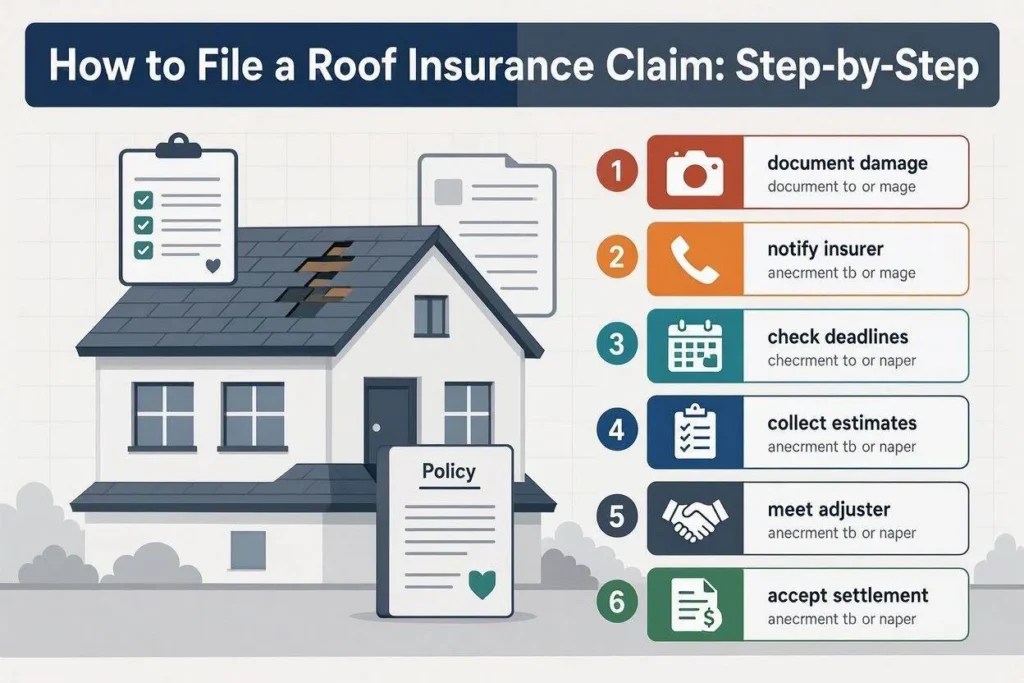
The roof insurance claim process doesn’t have to be confusing. Following a clear sequence can help you stay organized.
Step 1: Inspect Your Home From a Safe Location
After a major storm, look for visible signs of damage from the ground.
You may notice:
- Missing shingles
- Broken shingles
- Damaged gutters
- Fallen branches
- Loose flashing
- Damaged roof vents
- Water stains inside your home
Do not climb onto your roof after a storm if you aren’t trained and properly equipped. Roofing surfaces can be slippery or structurally unsafe.
If you suspect damage, arrange a professional roof inspection.
Step 2: Document the Damage
Before making your insurance claim, document what you can safely see.
Take clear photographs of:
- Roof damage visible from the ground
- Missing shingles
- Damaged gutters
- Broken exterior materials
- Fallen trees or branches
- Interior ceiling stains
- Water damage
- Damaged attic areas
Keep your photos and videos organized with the date and location of the damage when possible.
Good documentation can make it easier to explain what happened to your insurance company.
Step 3: Contact Your Insurance Company
Once you have identified possible storm damage, contact your homeowners insurance company.
Ask your insurer:
- Is storm damage covered under my policy?
- What is my roof deductible?
- Is there a claim filing deadline?
- What documentation do you need?
- Will an adjuster inspect the property?
- What happens after the inspection?
Your insurance company can explain the specific requirements of your policy.
Step 4: Schedule a Professional Roof Inspection
A professional roof inspection can help identify damage that may not be obvious from the ground.
A roofing professional may inspect:
- Shingles
- Flashing
- Roof valleys
- Ridge caps
- Vents
- Gutters
- Roof decking
- Other visible roofing components
Hail damage can sometimes be difficult for an untrained homeowner to identify. Small impacts may weaken shingles without creating an obvious hole.
A detailed inspection can provide useful information about the condition of your roof.
Step 5: Get a Written Estimate
If repairs are necessary, ask the roofing contractor for a written estimate.
The estimate may include:
- Materials
- Labor
- Removal of damaged materials
- Disposal
- Necessary repairs
- Estimated project scope
Having written documentation helps you understand what work is being recommended.
Step 6: Meet With the Insurance Adjuster
Your insurance company may send an adjuster to inspect the property.
The adjuster evaluates the reported damage and determines how the damage relates to your insurance policy.
You can provide the documentation you’ve collected, including:
- Photos
- Videos
- Inspection information
- Repair estimates
- Storm date information
Remember that the insurance company’s coverage decision depends on your policy and the circumstances of the damage.
Step 7: Review the Insurance Decision
After the claim is evaluated, carefully review the information provided by your insurance company.
Pay attention to:
- Approved repairs
- Deductible
- Covered damage
- Excluded damage
- Estimated repair costs
- Any additional documentation requested
If something is unclear, ask your insurance company for an explanation before moving forward.
What Roof Damage Is Common After a McKinney Storm?
McKinney homes can experience several types of storm-related roofing damage.
Hail Damage
Hail can cause:
- Bruised shingles
- Cracked shingles
- Granule loss
- Damaged flashing
- Damaged gutters
- Roof vent damage
Some hail damage isn’t immediately obvious, which is why a professional inspection can be valuable after a significant hailstorm.
Wind Damage
Strong winds can loosen or remove shingles and damage other roofing components.
Common signs include:
- Missing shingles
- Lifted shingles
- Damaged ridge caps
- Loose flashing
- Fallen roofing materials
Wind damage can allow rainwater to enter the roof system if repairs are delayed.
Water Damage
Heavy rainfall can expose existing weaknesses in a roof.
Signs of water intrusion may include:
- Ceiling stains
- Damp insulation
- Peeling paint
- Dripping water
- Musty odors
- Mold or mildew
If you discover active water intrusion, contact a roofing professional promptly.
How Long Do You Have to File a Roof Insurance Claim?

There isn’t one universal deadline for every homeowners insurance policy.
Your policy may specify a particular time period for reporting certain types of damage. Deadlines can also vary depending on the insurance company and circumstances.
For this reason, don’t assume you have unlimited time to file a roof insurance claim.
After discovering storm damage:
- Document the damage.
- Review your policy.
- Contact your insurance company.
- Ask about the applicable reporting deadline.
- Keep copies of your communications.
Prompt reporting can also help prevent additional damage from getting worse.
Should You File an Insurance Claim Before Calling a Roofer?
There isn’t one rule that applies to every situation.
A homeowner may want to first contact the insurance company to understand the claim process and reporting requirements. A professional roof inspection can also help document the physical condition of the roof.
The best approach depends on your policy and the circumstances of the damage.
If you suspect storm damage in McKinney, you can contact your insurance provider and arrange a professional inspection so you have a better understanding of the roof’s condition.
Can a Roofing Contractor Help With an Insurance Claim?
A roofing contractor can inspect the roof, document visible damage, explain recommended repairs, and provide an estimate.
Some roofing companies also assist homeowners with the documentation and communication involved in storm-damage projects.
However, a roofing contractor does not decide whether your insurance company will approve a claim.
Your insurance company makes coverage decisions according to your policy.
Roof Repair or Roof Replacement After an Insurance Claim?
Not every insurance-related roof problem requires a complete replacement.
| Situation | Possible Solution |
|---|---|
| Small localized damage | Roof repair |
| Several damaged shingles | Shingle replacement |
| Limited flashing damage | Flashing repair |
| Localized storm damage | Roof repair |
| Extensive roof damage | Possible replacement |
| Significant structural damage | Professional evaluation required |
The appropriate solution depends on the extent and type of damage, the condition of the existing roof, and the applicable insurance coverage.
Common Mistakes When Filing a Roof Insurance Claim
Avoiding common mistakes can make the process easier.
1. Waiting Too Long
Delaying the claim or inspection can allow additional damage to occur.
2. Climbing Onto a Damaged Roof
Roof inspections can be dangerous after severe weather. Leave roof access to trained professionals.
3. Throwing Away Damaged Materials
Keep damaged materials and documentation when practical unless your insurer or contractor advises otherwise.
4. Starting Major Repairs Without Documentation
Document the damage before major work begins whenever possible.
5. Assuming Everything Is Covered
Always verify coverage with your insurance company.
6. Ignoring Secondary Damage
Check your attic, ceilings, walls, and insulation for signs of water intrusion.
How to Protect Your Roof Before the Next Storm
The best time to prepare for storm damage is before a storm happens.
Regular Roof Inspections
Annual inspections can help identify aging or damaged roofing materials.
Clean Your Gutters
Clogged gutters can contribute to water drainage problems.
Trim Trees
Remove dead branches and trim branches that could fall onto your roof.
Replace Damaged Shingles
Small roofing problems should be repaired before severe weather arrives.
Check Attic Ventilation
Proper ventilation helps manage heat and moisture.
Keep Records
Keep records of roof repairs, inspections, maintenance, and major improvements.
Roof Insurance Claim Checklist
Use this simple checklist after suspected storm damage:
☐ Stay safely on the ground when inspecting the roof.
☐ Take photos and videos of visible damage.
☐ Check your attic and ceilings for water damage.
☐ Contact your homeowners insurance company.
☐ Ask about your deductible and reporting deadline.
☐ Schedule a professional roof inspection.
☐ Get a written repair estimate.
☐ Keep copies of documents and communications.
☐ Review the insurance decision carefully.
☐ Complete necessary repairs promptly.
Why Choose McKinney Roof Pros?
When your McKinney home experiences storm or hail damage, having a local roofing professional inspect the property can help you understand the condition of your roof.
McKinney Roof Pros provides roofing services for homeowners in McKinney, TX, including:
- Roof Inspections
- Roof Repair
- Storm Damage Roofing
- Hail Damage Roof Repair
- Roof Replacement
- Emergency Roof Repair
- Residential Roofing
Our goal is to help homeowners understand their roofing options and make informed decisions about necessary repairs.
Frequently Asked Questions
How do I file a roof insurance claim?
Start by documenting visible damage, reviewing your homeowners insurance policy, contacting your insurance company, and arranging a professional roof inspection. Your insurer will explain the specific claim requirements and next steps.
Does homeowners insurance cover hail damage to a roof?
Some homeowners insurance policies cover qualifying hail damage, but coverage depends on the specific policy, deductible, exclusions, and circumstances. Contact your insurance company to confirm your coverage.
Should I get a roof inspection before filing an insurance claim?
A professional inspection can help you understand the condition of your roof and document visible damage. You should also contact your insurance company about its preferred claim process.
Can I repair my roof before the insurance adjuster arrives?
Emergency measures may sometimes be necessary to prevent additional damage, but contact your insurance company for instructions and document the original damage whenever possible. Avoid making major repairs before the damage has been properly documented unless necessary for safety or to prevent further damage.
Will insurance pay for a complete roof replacement?
Not necessarily. Coverage depends on the cause and extent of damage, your policy, the roof’s condition, deductible, and the insurer’s determination.
Does insurance cover an old roof?
Coverage for an older roof depends on your policy and the circumstances of the damage. Some policies may have different settlement terms for older roofing materials.
What should I do if my roof starts leaking after a storm?
Protect the interior of your home from additional water damage if it is safe to do so, document the damage, contact your insurance company, and arrange a professional roof inspection.
Final Thoughts
Knowing how to file a roof insurance claim can make a stressful situation easier to manage after a storm. The most important steps are to document the damage, contact your insurance company promptly, understand your policy, and have the roof professionally inspected.
For homeowners in McKinney, TX, hail and wind storms can create roofing problems that aren’t always visible from the ground. Addressing damage early can help prevent additional water damage and protect your home.
Remember that insurance coverage varies from one policy to another. Always confirm your coverage, deductible, deadlines, and claim requirements directly with your insurance provider.