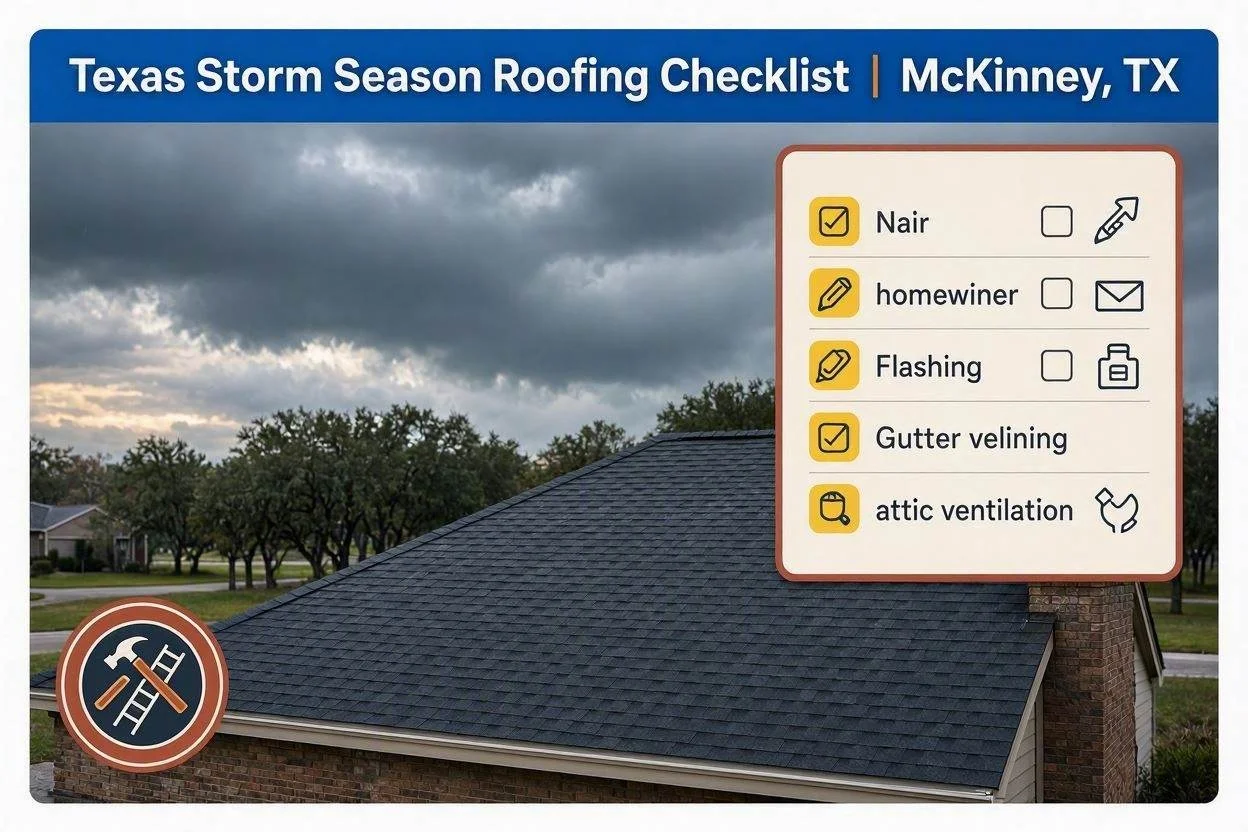
Texas Storm Season Roofing Checklist: Prepare Your Roof Before Severe Weather
Texas weather can change quickly. Strong winds, hail, heavy rain, and severe thunderstorms can put significant stress on a residential roof, especially when the roofing system already has loose shingles, damaged flashing, clogged gutters, or other maintenance issues.
A Texas Storm Season Roofing Checklist gives homeowners a simple way to prepare before severe weather arrives. Taking care of small problems ahead of time can help protect your home and make it easier to spot damage after a storm.
For homeowners in McKinney and throughout North Texas, regular roof maintenance is particularly useful because severe thunderstorms can bring strong winds and hail.
This guide covers the most important things to check before storm season and what to do after severe weather.
Why You Need a Texas Storm Season Roofing Checklist
Storm preparation isn’t only about what happens during a storm. Much of the work can be done before bad weather arrives.
A roof that’s already in poor condition may be more vulnerable when strong winds or heavy rain occur.
Using a Texas Storm Season Roofing Checklist can help you identify problems such as:
- Loose or damaged shingles
- Worn flashing
- Blocked gutters
- Damaged roof vents
- Overhanging tree branches
- Poor attic ventilation
- Existing leaks
- Deteriorated roofing materials
The goal isn’t to make a roof completely storm-proof. No roofing system can guarantee protection against every severe weather event.
Instead, the goal is to keep the roofing system in good condition and address known problems before they become bigger ones.
1. Inspect Your Shingles
Start your Texas Storm Season Roofing Checklist by checking the condition of your shingles.
From the ground, look for:
- Missing shingles
- Cracked shingles
- Curling edges
- Lifted shingles
- Dark or damaged areas
- Excessive granule loss
If you notice anything unusual, don’t climb onto the roof yourself.
A professional roofing contractor can inspect the roof more closely and determine whether repairs are needed.
2. Check Your Roof Flashing
Flashing protects areas where different parts of the roofing system meet.
Common locations include:
- Chimneys
- Roof valleys
- Skylights
- Vents
- Roof edges
- Wall intersections
Damaged or loose flashing can create opportunities for water to enter the home during heavy rain.
Before storm season, make sure these areas are in good condition.
3. Clean Your Gutters and Downspouts
Gutters play an important role in directing rainwater away from the roof and foundation.
Blocked gutters can prevent water from draining properly.
Remove leaves, branches, dirt, and other debris from gutters and downspouts.
After cleaning them, make sure water can flow freely through the system.
This simple step should always be included in a Texas Storm Season Roofing Checklist.
4. Look for Loose Roof Components
Strong winds can take advantage of loose roofing materials.
Check for signs that vents, flashing, gutters, or other exterior components may be loose or damaged.
Don’t try to repair roofing components yourself if the work requires climbing onto the roof.
A professional inspection can identify areas that need attention before the next storm.
5. Trim Overhanging Tree Branches
Trees can become a significant concern during strong winds.
Large branches hanging over your roof can break and fall during severe weather.
Before storm season, inspect trees around your property.
Pay particular attention to:
- Dead branches
- Weak limbs
- Branches directly above the roof
- Trees leaning toward the house
Professional tree trimming may be appropriate when branches are large or difficult to reach safely.
6. Check Your Attic for Signs of Moisture
Your attic can provide useful clues about the condition of your roof.
Look for:
- Water stains
- Damp insulation
- Mold-like growth
- Musty odors
- Wet wood
- Daylight entering through unexpected openings
If you notice moisture before storm season, don’t ignore it.
An existing leak can become worse during heavy rain.
7. Check Attic Ventilation
Proper attic ventilation helps manage heat and moisture inside the roofing system.
Texas summers can expose homes to prolonged heat, making attic conditions particularly important.
Look for blocked vents or other obvious ventilation problems.
If you’re unsure whether your attic ventilation is adequate, ask a roofing professional to evaluate it during an inspection.
8. Inspect Your Gutters for Damage
Cleaning gutters isn’t enough if the gutters themselves are damaged.
Look for:
- Cracks
- Sagging sections
- Loose fasteners
- Separations
- Damaged downspouts
A damaged gutter system may not handle heavy rainfall effectively.
Repairing these problems before storm season can help maintain proper drainage.
9. Check Roof Edges and Fascia
Roof edges can be exposed to strong wind.
Inspect visible fascia and soffit areas around the home for signs of damage or deterioration.
Loose or damaged sections may need attention before severe weather arrives.
If you see sections that are pulling away from the house, arrange a professional inspection.
10. Review the Age and Condition of Your Roof
Roof age doesn’t automatically mean that replacement is necessary.
However, an older roof may have more accumulated wear than a newer roofing system.
Consider:
- When the roof was installed
- Previous repairs
- Previous storm damage
- Current shingle condition
- Existing leaks
- General appearance of the roofing system
If you’re unsure about the roof’s remaining service life, a professional inspection can provide more useful information than guessing based on age alone.
11. Make Sure Roof Repairs Are Completed
If you’ve already noticed a roofing problem, don’t wait until storm season is in full swing.
A loose shingle or damaged flashing may seem like a minor issue.
However, severe weather can turn a small weakness into a larger problem.
Complete necessary repairs before the next major storm whenever possible.
12. Check Your Home’s Exterior
Storm preparation shouldn’t stop at the roof.
Walk around your property and look for anything that could become a problem during strong winds.
Secure or store:
- Patio furniture
- Outdoor decorations
- Lightweight equipment
- Loose tools
- Garden items
- Other objects that could become airborne
Strong winds can turn unsecured objects into projectiles that may damage siding, windows, or roofing materials.
13. Review Your Homeowners Insurance
Take some time to understand your homeowners insurance policy before severe weather occurs.
Know:
- Your deductible
- What types of storm damage may be covered
- How to report damage
- What documentation may be required
Insurance policies vary, so don’t assume that every type of roof damage is automatically covered.
If you experience significant storm damage, contact your insurance provider and follow its claims process.
14. Keep Roofing Information and Photos
It’s useful to keep records of your roof before storm season.
Take photographs of the roof and exterior areas when the property is in normal condition.
Keep information such as:
- Roof installation date
- Previous repair records
- Contractor information
- Warranty documents
- Roofing material details
- Insurance information
If damage occurs later, having before-and-after documentation may help you understand what changed.
15. Know What to Look for After a Storm
Your Texas Storm Season Roofing Checklist shouldn’t end when the storm begins.
After severe weather has passed and conditions are safe, inspect the property from the ground.
Look for:
- Missing shingles
- Lifted shingles
- Fallen branches
- Damaged gutters
- Dented vents
- Damaged flashing
- Ceiling stains
- Attic moisture
- Other obvious signs of impact
Don’t climb onto the roof to investigate.
If you suspect damage, contact a professional roofing contractor.
What to Do If You Find Storm Damage
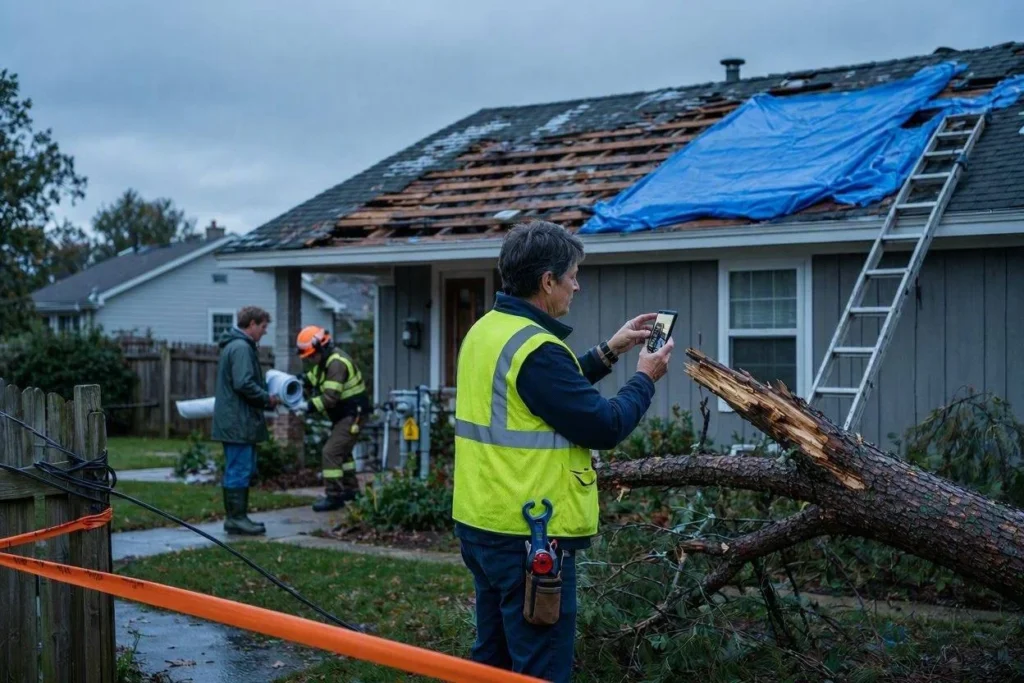
If you discover roofing damage after a storm, don’t panic.
Start by documenting what you can safely see.
Take clear photographs and note when the storm occurred.
If there’s an active leak, protect belongings inside the home and arrange professional assistance.
A roofing professional can determine whether you need:
- Minor repairs
- Shingle replacement
- Flashing repair
- Temporary protection
- More extensive restoration
- Full roof replacement
The correct solution depends on the actual condition of the roofing system.
McKinney Roof Preparation for Storm Season
McKinney homeowners should take storm preparation seriously.
Severe thunderstorms in North Texas can bring combinations of strong winds, hail, and heavy rainfall.
A regular roof inspection can help identify weaknesses before severe weather arrives.
Local homeowners can also benefit from keeping gutters clear, maintaining nearby trees, and addressing visible roofing problems before storm season.
A well-maintained roof isn’t guaranteed to avoid storm damage, but preparing ahead of time can make your home better positioned to handle severe weather.
Common Storm Preparation Mistakes
Ignoring Small Roof Problems
Small roofing problems can become more serious during severe weather.
Waiting Until a Storm Is Coming
Trying to arrange repairs at the last minute can be stressful, especially when many homeowners are dealing with the same weather event.
Climbing Onto the Roof Yourself
Roof inspections can involve fall hazards. Leave close inspections to trained professionals.
Forgetting About Gutters
Roof preparation isn’t complete if gutters are blocked or damaged.
Ignoring Trees Around the Home
Overhanging branches can become a serious hazard during high winds.
Assuming an Old Roof Automatically Needs Replacement
Roof age is only one factor.
The actual condition of the roofing system should be evaluated before making a replacement decision.
Frequently Asked Questions
What should be on a Texas Storm Season Roofing Checklist?
A Texas Storm Season Roofing Checklist should include shingle inspection, flashing checks, gutter cleaning, tree maintenance, attic inspection, roof ventilation, exterior preparation, and a review of previous roofing problems.
When should I prepare my roof for storm season?
It’s better to prepare before severe weather becomes frequent. Addressing maintenance issues early gives you more time to arrange professional repairs if needed.
Can regular maintenance prevent storm damage?
Maintenance cannot prevent all storm damage, especially from severe hail or extreme winds. However, keeping the roof in good condition can help address existing weaknesses before a storm.
Should I inspect my roof after a severe storm?
If the storm involved strong winds or hail, a professional inspection can help identify damage that isn’t obvious from the ground.
What should I do if I find missing shingles?
Document the damage from a safe location and contact a roofing professional. Avoid climbing onto the roof yourself.
Should I clean my gutters before storm season?
Yes. Clean gutters and functioning downspouts help rainwater drain properly away from the roof and home.
Can trees damage my roof during a storm?
Yes. Large or weak branches can break during strong winds and fall onto the roof.
Does an older roof always need replacement before storm season?
No. Roof age alone doesn’t determine whether replacement is necessary. A professional inspection can evaluate the roof’s actual condition.
Does homeowners insurance cover storm damage?
Coverage depends on your individual policy and the circumstances of the damage. Contact your insurance provider for specific information.
Why should McKinney homeowners prepare before storm season?
North Texas weather can include strong winds, hail, and heavy thunderstorms. Preparing the roofing system in advance can help identify maintenance problems before severe weather occurs.
Final Thoughts
A roof doesn’t need to be completely rebuilt just because storm season is approaching.
What it does need is attention.
Using a Texas Storm Season Roofing Checklist can help you identify loose shingles, damaged flashing, blocked gutters, tree hazards, attic moisture, and other problems before severe weather arrives.
For homeowners in McKinney, preparation is especially useful because North Texas storms can bring strong winds, hail, and heavy rain.
Check the roof from the ground, keep gutters clean, maintain trees around the property, address known roofing problems, and arrange a professional inspection when you’re unsure about the condition of the roof.
And remember: no checklist can guarantee that a roof will survive every severe storm. The purpose of preparation is to keep your roofing system properly maintained and respond quickly when problems occur.