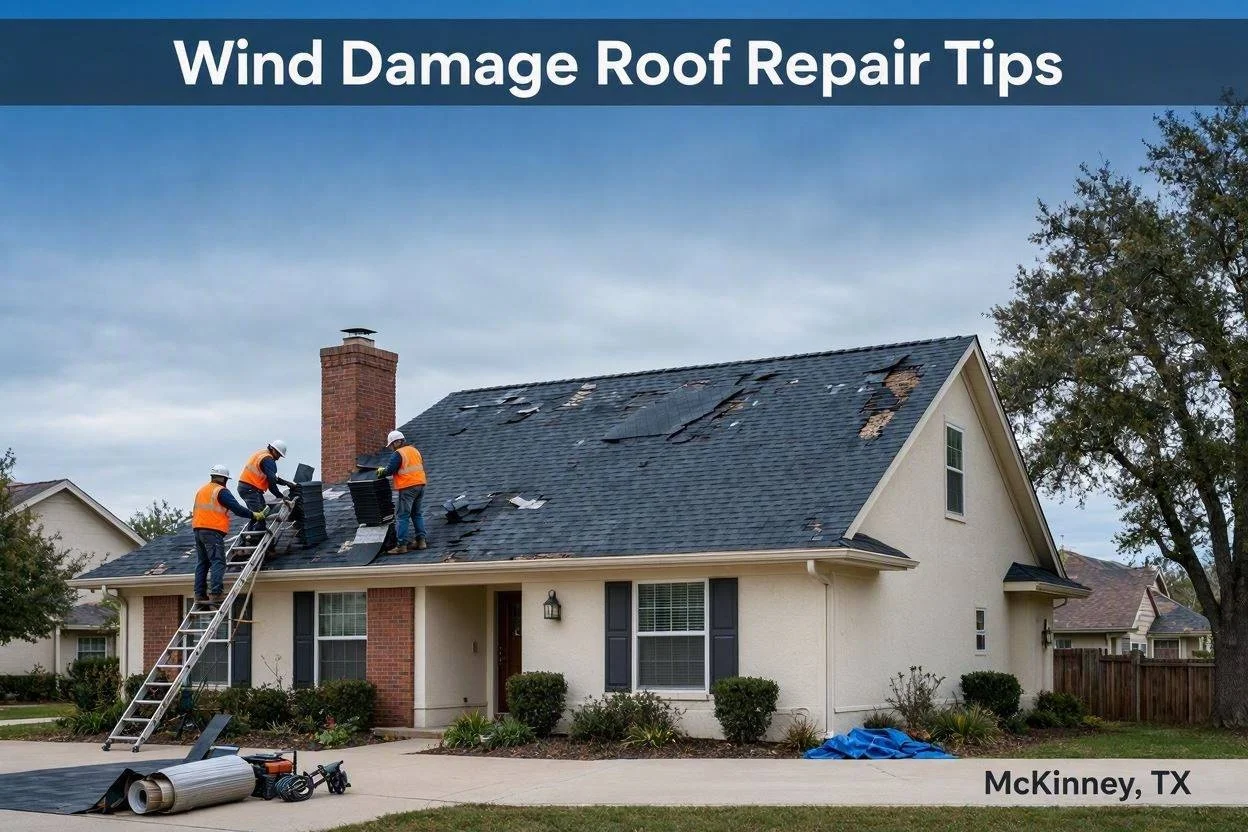
Wind Damage Roof Repair Tips: A McKinney Homeowner’s Guide
Strong winds can cause serious problems for a roof, even when the damage isn’t obvious from the ground. Shingles can loosen, flashing can shift, and debris can strike the roof during a severe storm. In some cases, the roof may look fine at first but develop leaks later.
Knowing when you need wind damage roof repair can help you deal with problems before they become more expensive. For homeowners in McKinney, Texas, quick action after strong winds or severe storms can help protect the roof and the rest of the home.
This guide explains how wind can damage a roof, what warning signs to look for, and what McKinney homeowners should do after a major windstorm.
How Does Wind Damage a Roof?
Wind doesn’t have to completely remove a roof to cause problems.
Strong gusts can put pressure on shingles, flashing, roof edges, vents, and other exposed components. Repeated storms can also make existing weaknesses worse.
Common types of wind damage include:
- Lifted shingles
- Missing shingles
- Torn shingles
- Cracked roofing materials
- Damaged flashing
- Loose gutters
- Damaged soffits or fascia
- Fallen branches
- Exposed underlayment
- Water intrusion
The severity depends on the strength of the wind, the condition and age of the roof, installation quality, and whether other objects strike the roofing system.
Signs You May Need Wind Damage Roof Repair
Some signs of wind damage are easy to spot. Others require a closer inspection.
1. Missing Shingles
Missing shingles are one of the clearest signs that strong winds have affected your roof.
After a storm, check your yard and surrounding property for pieces of roofing material. You can also look at the roof from the ground for areas that appear different from the rest of the surface.
Missing shingles leave the underlying roofing system more exposed to weather.
2. Lifted or Curled Shingles
A shingle doesn’t have to disappear completely to create a problem.
Wind can lift the edges of shingles or break the seal that helps keep them in place. A lifted shingle may still be attached but can become more vulnerable during the next storm.
This type of damage may require wind damage roof repair before additional weather makes the problem worse.
3. Damaged Flashing
Flashing helps protect areas where the roof meets walls, chimneys, vents, skylights, and other structures.
Strong winds can loosen or damage flashing.
Because these areas are particularly important for preventing water intrusion, damaged flashing shouldn’t be ignored.
4. Granules in the Gutters
If you have asphalt shingles, check your gutters after a major storm.
Some granule accumulation is normal over the life of a roof, but a sudden increase after severe weather can indicate that roofing materials have been affected.
Granule loss alone doesn’t prove wind damage, but it can be a reason to arrange a closer inspection.
5. Fallen Branches or Debris
High winds can send branches, outdoor objects, and other debris onto a roof.
Even a relatively small branch can damage shingles if it lands with enough force.
Look around the property after a storm and check whether anything has struck the roof.
Can Wind Damage a Roof Without Removing Shingles?
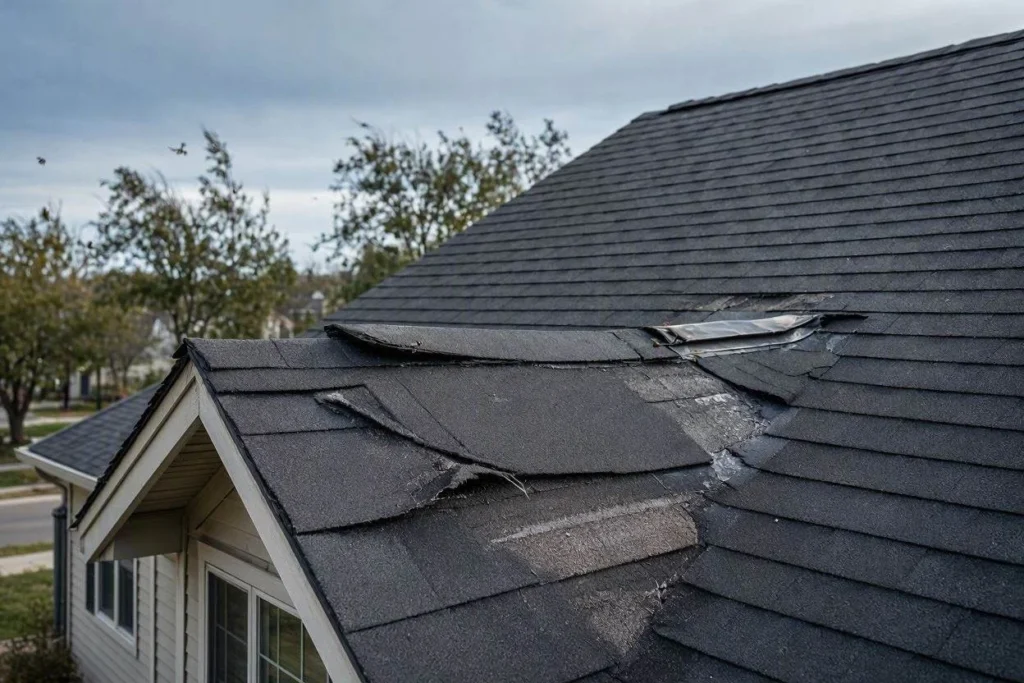
This is an important point for homeowners.
Wind can loosen shingles, damage seals, shift flashing, or affect other roofing components without completely removing the roofing material.
That’s why a roof that looks mostly intact may still have storm-related problems.
If your property experienced strong winds and you notice unusual roofing conditions, a professional inspection can help determine whether wind damage roof repair is necessary.
What Should You Do After a Windstorm?
The first priority is safety.
Don’t inspect the roof while strong winds, lightning, or other severe weather is still present.
Once conditions are safe, follow these steps.
Step 1: Inspect the Property From the Ground
Look for missing shingles, fallen branches, damaged gutters, and other obvious problems.
Step 2: Check Inside the Home
Look at ceilings and walls for new stains or signs of moisture.
If you have attic access, look for damp insulation, water marks, or other signs of water intrusion.
Step 3: Take Photographs
Photograph visible damage from a safe location.
Take both wider photos showing where the damage occurred and closer photos when possible.
Step 4: Avoid Climbing Onto the Roof
A damaged roof may be slippery or unstable.
Leave close inspection to a qualified roofing professional.
Step 5: Arrange an Inspection
If you suspect storm damage, have the roof inspected so you know what actually needs to be repaired.
Why Professional Wind Damage Roof Repair Matters
It may be tempting to replace a missing shingle yourself, especially when the damage looks small.
However, wind damage isn’t always limited to what you can see.
A professional inspection can help identify:
- Loose shingles
- Damaged seals
- Missing roofing materials
- Damaged flashing
- Problems around vents
- Roof edge damage
- Water intrusion
- Damage to underlying materials
Fixing only the obvious problem without checking the surrounding area can leave hidden issues unresolved.
Can Wind Damage Cause a Roof Leak Later?
A roof doesn’t always start leaking immediately after wind damage.
For example, a lifted shingle may initially keep most rainwater out. Repeated exposure to rain and additional wind can eventually worsen the damaged area.
Once water gets beneath the roofing materials, it can potentially affect the roof deck, insulation, attic, drywall, and interior finishes.
This is why addressing wind damage roof repair early can be a smart way to reduce the risk of additional damage.
Wind Damage Roof Repair vs. Roof Replacement
Not every wind-damaged roof needs to be replaced.
The appropriate solution depends on the extent of the damage and the overall condition of the existing roof.
When Repair May Be Enough
Roof repair may be appropriate when:
- Only a small number of shingles are damaged
- Damage is limited to one area
- The roof is otherwise in good condition
- Flashing can be repaired or replaced
- There is no significant underlying damage
A targeted repair can restore the affected section without replacing the entire roof.
When Replacement May Be Considered
A complete replacement may make more sense when:
- Wind damage is widespread
- The roof is already near the end of its useful life
- Shingles are deteriorating across large areas
- There are repeated leaks
- Previous repairs have become frequent
- The underlying roof system has significant damage
A professional roofing contractor should explain the reason for recommending replacement rather than simply assuming that every storm requires a new roof.
How Much Does Wind Damage Roof Repair Cost?
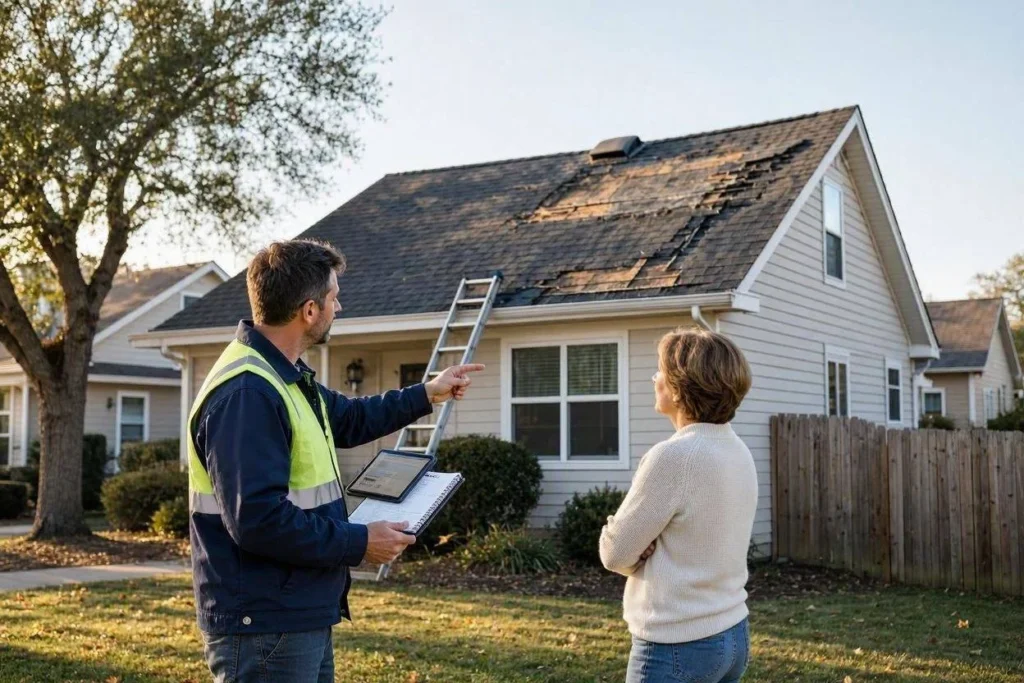
There isn’t one standard price for repairing wind damage.
The cost can vary depending on the roofing material, size of the damaged area, roof accessibility, labor, and whether underlying components also need attention.
Factors may include:
- Number of damaged shingles
- Roof pitch
- Roofing material
- Flashing repairs
- Underlayment
- Roof decking
- Vent repairs
- Labor
- Debris removal
A small repair and a major storm-damage project can have very different costs.
The most useful way to understand the price is to have the roof inspected and receive a detailed written estimate.
Does Homeowners Insurance Cover Wind Damage?
Coverage depends on the individual homeowners insurance policy and the circumstances surrounding the damage.
If you believe a storm has caused significant damage, contact your insurance provider and ask about your coverage, deductible, and claim process.
A roofing contractor can document visible damage and provide an estimate, but the insurance company determines whether a particular claim is covered.
Don’t allow a contractor to pressure you into filing a claim or promise that your insurance company will automatically pay for a replacement roof.
Why McKinney Homeowners Should Take Wind Damage Seriously
McKinney and the surrounding North Texas area experience severe weather that can include strong winds, hail, and heavy thunderstorms.
A roof has to deal with these conditions while also handling normal exposure to Texas heat and sunlight.
After a particularly strong storm, homeowners should pay attention to changes in the roof’s condition.
If shingles are missing, branches have fallen onto the roof, or you notice signs of water intrusion, don’t wait for the problem to become worse.
How to Reduce the Risk of Wind Damage
No roofing system can be guaranteed to withstand every severe storm.
However, regular maintenance can help identify weaknesses before a major weather event.
Keep Gutters Clear
Blocked gutters can interfere with drainage and contribute to other roof-related problems.
Trim Large Branches
Branches hanging directly over your home can become a hazard during strong winds.
Keeping trees properly maintained can reduce the risk of branches striking the roof.
Replace Damaged Shingles
Loose or deteriorated shingles can be more vulnerable during severe weather.
Addressing small roofing problems before storm season may help prevent them from becoming larger issues.
Check Flashing
Pay attention to areas around vents, chimneys, skylights, and roof edges.
Damaged flashing can create opportunities for water to enter.
Schedule Routine Inspections
Regular inspections can help identify normal wear and potential weaknesses before they become major problems.
How to Choose a Roofing Contractor in McKinney
After a major storm, you may see an increase in contractors offering roofing services.
Take your time before choosing one.
Look for a contractor who provides:
- A detailed roof inspection
- Written estimates
- Clear explanations
- Proof of appropriate insurance
- Information about materials
- Warranty details
- A local service presence
Be cautious of anyone who immediately tells you that the entire roof must be replaced without properly explaining the damage.
A trustworthy contractor should be willing to answer questions and explain your options.
Common Mistakes Homeowners Make After Wind Damage
Waiting for a Leak
A roof can have damage without immediately leaking.
Waiting until water reaches the ceiling may allow the problem to become more complicated.
Climbing Onto the Roof
Trying to inspect a damaged roof yourself can create a serious fall risk.
Choosing the Cheapest Estimate
The lowest price doesn’t always represent the best value. Compare the scope of work, materials, warranties, and labor.
Assuming Every Problem Requires Replacement
Some wind damage can be repaired.
Get a professional assessment before deciding that a complete replacement is necessary.
Ignoring Small Problems
A lifted shingle or damaged flashing may look minor, but additional storms can make it worse.
Frequently Asked Questions
What is wind damage roof repair?
Wind damage roof repair involves fixing roofing problems caused by strong winds, such as missing or lifted shingles, damaged flashing, loose roofing materials, and related issues.
How do I know if my roof has wind damage?
Look for missing or lifted shingles, damaged flashing, fallen branches, loose roofing materials, and signs of water intrusion. A professional inspection can identify less obvious damage.
Can wind damage happen without missing shingles?
Yes. Wind can loosen shingles, break seals, or damage flashing without completely removing the roofing material.
How quickly should wind damage roof repair be completed?
Significant damage should be addressed as soon as reasonably possible. Delaying repairs can increase the chance of water intrusion during future storms.
Does wind damage always require a new roof?
No. Limited damage can often be repaired. Replacement depends on the extent of the damage and the age and condition of the existing roof.
Can strong winds cause a roof leak?
Yes. Wind can lift shingles or damage flashing and create openings where water can enter.
Should I inspect my roof after a strong windstorm?
If the storm was severe or you notice signs of damage around your property, a professional inspection is a sensible step.
Can insurance cover wind damage roof repair?
It may, depending on your individual homeowners insurance policy. Your insurance provider determines coverage and claim eligibility.
Should I repair wind damage myself?
Minor exterior issues may look simple, but roofing work can be dangerous and hidden damage can be difficult to identify. A professional inspection is generally safer.
Why hire a local roofing contractor in McKinney?
A local contractor can provide convenient follow-up service and understands the weather conditions that commonly affect homes in the McKinney and North Texas area.
Final Thoughts
Strong winds can do more to a roof than simply blow off a few shingles. They can loosen roofing materials, damage flashing, affect roof edges, and create openings that may eventually allow water into your home.
Knowing the signs of wind damage roof repair needs can help McKinney homeowners respond before a small problem turns into a larger one.
After a severe storm, start by putting safety first. Inspect the property from the ground, look for signs of water intrusion, document visible damage, and arrange a professional inspection if you have concerns.
Not every damaged roof needs to be replaced. Sometimes a targeted repair is all that’s needed. The important thing is to understand the condition of the roof and choose the solution that actually fits the damage.